

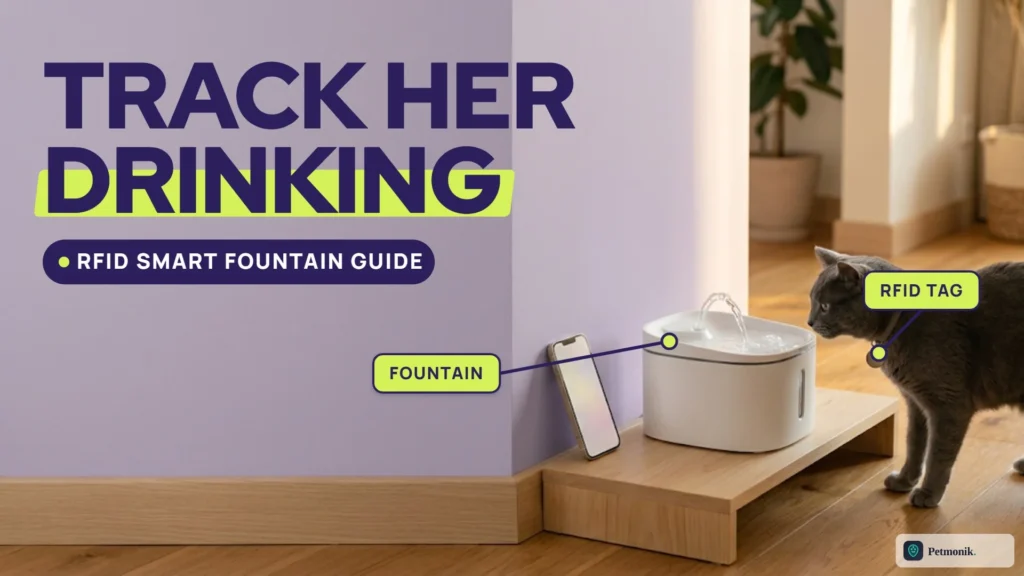
It is 3 a.m. and you hear your cat scratching in the litter box again. Third visit tonight, and each one ends the same way: a few drops, or nothing. Many owners only connect the dots later, when they realize the water bowl had been quiet for days or the pattern of drinking had changed. That is the idea behind an RFID water fountain for cat UTI monitoring: a fountain that recognizes each cat by a collar tag and logs how much and how often she drinks. To be clear up front, a fountain cannot diagnose a urinary tract infection. What it can do is give you a record of drinking habits, so a change stands out sooner and you walk into the vet with data instead of guesses. Below we break down which urinary warning signs require urgent veterinary care, how RFID collar-tag tracking works in multi-cat homes, and how to turn app drinking logs into useful context for your vet. In short, an RFID water fountain cat UTI setup is a tracking aid, not a test.
Quick Summary: What an RFID Fountain Can and Cannot Do
- It cannot diagnose a UTI. Diagnosis needs a vet exam and urinalysis, often with a urine culture.
- It can log drinking. Petlibro says the Dockstream RFID tracks each cat’s hydration amount, frequency and drinking times through a collar tag.
- Litter box signs matter more. Straining, frequent trips with little urine, blood in the urine and crying while peeing are the classic warning signs.
- A male cat straining with no urine is an emergency. A urethral blockage can become fatal within 24 to 48 hours and requires immediate emergency care.
Why Cat UTI Symptoms Are Easy to Miss
Cats hide illness, and the signs of a urinary problem often look like bad manners. Feline lower urinary tract issues typically show up through the same cluster of warning signs:
- Straining in the litter box.
- Frequent trips that produce only a few drops.
- Blood or a pink-red tinge in the urine.
- Crying while urinating.
- Urinating outside the box.
- Excessive licking of the genital area.
- Less common signs include strong-smelling or cloudy urine, reduced appetite and vomiting.
Vets use the term FLUTD (feline lower urinary tract disease) for this family of problems. A true bacterial infection is only one cause. Others include cystitis without infection, bladder stones and mucous plugs, and each is treated differently. That is why guessing at home is a bad idea.
Emergency Signs: When to Skip the App and Call the Vet
If your male cat is straining and producing no urine, treat it as an emergency. A urethral blockage can be fatal within 24 to 48 hours, according to veterinary guidance. Also act quickly if you see vomiting, hiding, lethargy or a firm, painful belly. No water fountain data changes this. Do not wait for the app to show a trend.
How an RFID Smart Water Fountain Tracks Drinking
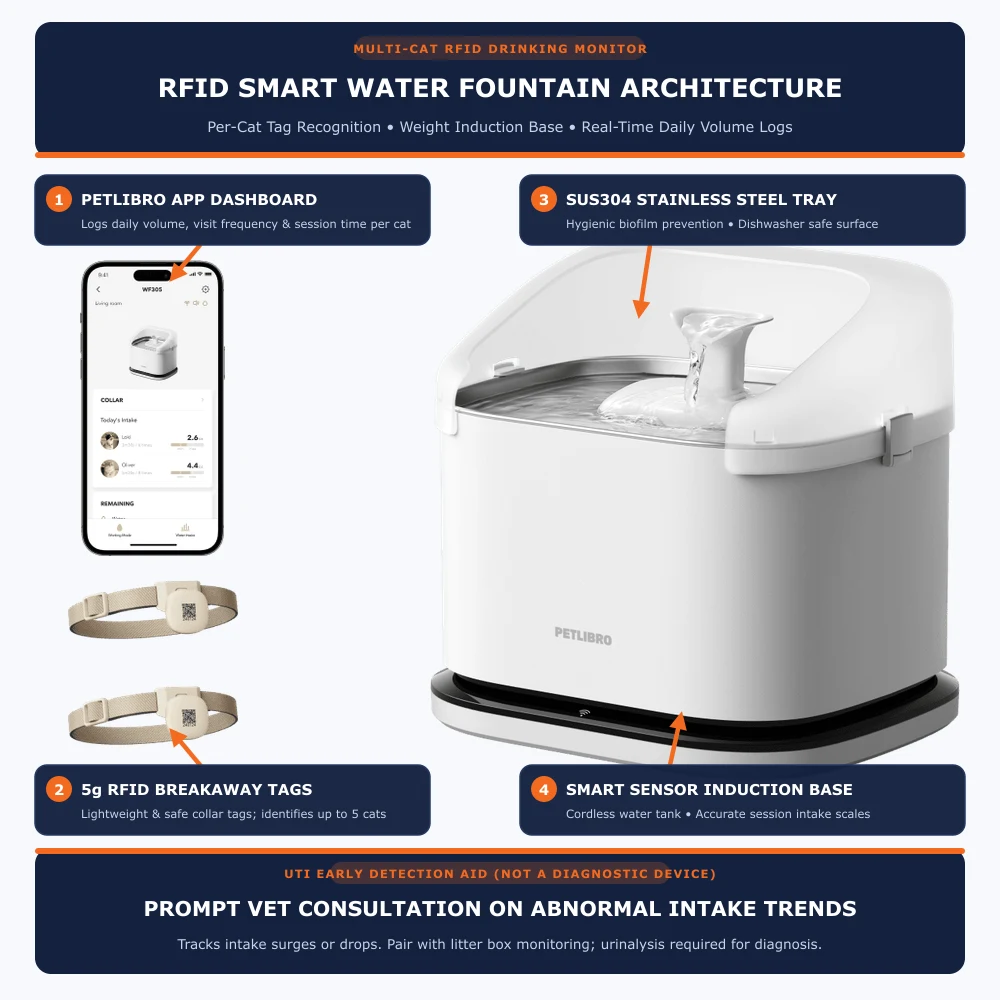
An RFID fountain reads a small tag on your cat’s collar each time she approaches the water. The system then ties the drinking session to that cat. The Petlibro Dockstream RFID fountain supports up to five tagged cats, ships with two breakaway collar tags, and logs intake volume, visit frequency, and timestamps in its app. It also sends alerts for what it calls irregular hydration patterns or low water. Petlibro lists a 23 dB noise level and four-layer filtration. The company’s own page lists the fountain with two tags at $99.99, so check current pricing. If you are new to this technology, our guide to smart water fountain RFID hydration tracking explains the basics.
What the Data Can Show You
| Data point | What it may suggest | What to do |
|---|---|---|
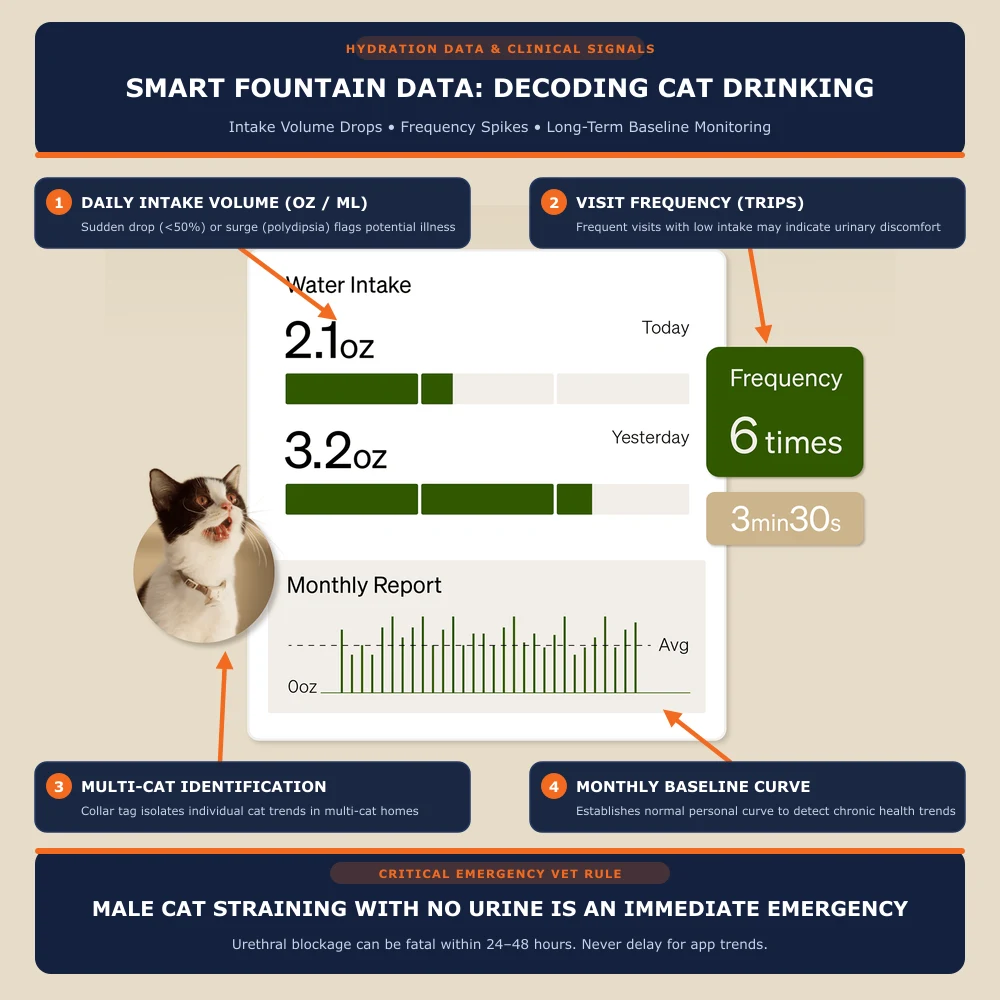
| Drinking more than usual | Increased thirst can go with kidney disease, diabetes, hyperthyroidism, liver disease or urinary disease, per Purina. Warm weather or a diet change can also explain it. | Note the dates and call your vet if it persists |
| Drinking less than usual | Possible illness, a dislike of the fountain, or a dirty pump. Not a diagnosis. | Clean the fountain, then call your vet if it continues |
| Sudden change in visit timing | May reflect stress, pain or a routine change | Watch the litter box and appetite too |
| One cat out of a group differs | Only per-cat tracking can catch this in a multi-cat home | Show the app history to your vet |
These readings are prompts to look closer, not diagnoses. The fountain measures water, not urine.
Why Hydration Matters for Urinary Health
Vet-reviewed guidance on blocked cats lists dry-food diets that lack hydration, stress and obesity among the contributing factors, and recommends adding wet food and offering multiple water sources or fountains. Petlibro’s own product page says that good hydration helps support kidney and urinary health. That is a general wellness claim from the maker, not proof that a fountain prevents UTIs. For a sense of normal intake, Purina gives about 7 ounces a day for a 9-pound cat and about 9 ounces for a 12-pound cat, and notes that cats eating wet food drink less because the food contains water.
How to Use Fountain Data Without Overreacting
- Build a baseline first. Give the system a week or two to learn what normal looks like for each cat.
- Compare like with like. Heat, a new food, or a switch from dry to wet food changes how much a cat drinks.
- Log the date a change started. A screenshot of the app history helps your vet.
- Pair it with litter box watching. Urine volume, frequency and straining tell you more than water totals.
- Keep the tag on. A cat that loses her collar tag creates gaps or misattributed data.
- Keep the fountain clean. A dirty pump can lower drinking by itself. See our guide to cleaning a smart pet fountain pump.
RFID Fountain vs Other Ways to Watch for UTI Signs
| Method | Catches | Misses |
|---|---|---|
| RFID smart fountain | Per-cat drinking amount, frequency and timing | Urine output, straining, blood in the urine |
| Watching the litter box | Straining, frequent small visits, accidents | Water intake, unless you measure it |
| Vet urinalysis | Infection, crystals, blood, concentration | Day-to-day changes between visits |
| Smart litter box | Visit counts and timing, depending on the model | Drinking behavior |
No single tool covers everything. If you are putting together a full monitoring setup, our guide to a feeder, camera and fountain bundle shows how the pieces fit.
Choosing an RFID Fountain for a Multi-Cat Home
- Number of cats supported. Check how many tags the system handles and how many come in the box.
- Tag comfort. A tag the cat tolerates on her collar is more useful than a better sensor she removes.
- Alerts you can adjust. Too many alerts get ignored.
- Easy cleaning. A fountain you can take apart gets cleaned more often.
- Data export or screenshots. Your vet will want dates, not impressions.
What to Do If You Suspect a UTI
- Call your vet and describe the symptoms. Never give human pain medication—common over-the-counter drugs like acetaminophen and ibuprofen are toxic to cats.
- Bring a note of when symptoms began and screenshots of drinking history.
- Expect urinalysis and possibly a urine culture or imaging to separate infection from cystitis or stones.
- Follow the treatment plan, which may include antibiotics, pain control, a prescription diet or, for blockages, emergency care.
For the bigger picture on drinking habits, see our look at whether flowing water makes cats drink more.
The bottom line: an RFID water fountain is a useful early-warning aid for hydration changes, particularly in multi-cat homes, but it is not a UTI detector. Use it to notice, not to decide. The litter box and your vet remain the real test. Petmonik will update this guide as brands add features.
Frequently Asked Questions
Can an RFID water fountain detect a cat UTI?
No. It tracks how much and how often each tagged cat drinks, which may help you spot a change, but diagnosing a UTI needs a vet exam and urinalysis.
What are the first signs of a UTI in cats?
Common early warning signs include straining in the litter box, frequent trips producing only a few drops, blood or a pink tinge in the urine, crying while urinating, accidents outside the box, and excessive genital licking.
Do cats with UTIs drink more water?
Not always. Increased drinking is linked with several conditions, including kidney disease, diabetes and urinary disease, so a change in drinking is a reason to call your vet rather than a UTI sign by itself.
How does an RFID pet fountain work?
A collar tag is read when your cat approaches the fountain, so the app can log hydration amount, frequency and drinking times for that cat. Petlibro says its Dockstream RFID supports up to five cats.
When is a cat urinary problem an emergency?
A male cat straining without producing urine needs immediate veterinary care. A urethral blockage can be fatal within 24 to 48 hours.
Does a water fountain prevent cat UTIs?
There is no proof of that. Vet guidance links hydration, wet food and multiple water sources with urinary health, but a fountain is one support among several.