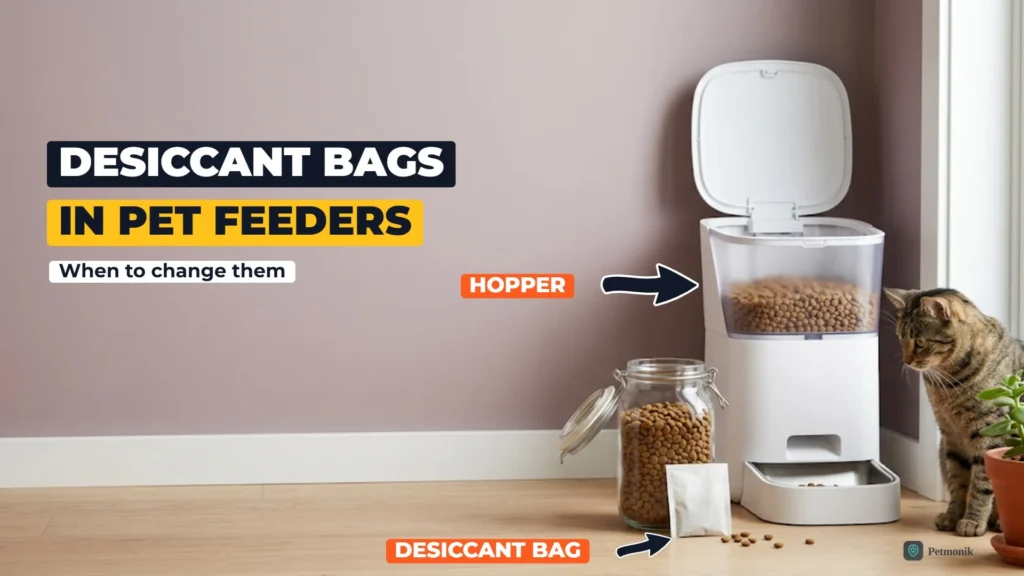
Replace the desiccant bag before the kibble starts clumping or smelling stale — it’s one of the cheapest maintenance jobs on a smart feeder, and skipping it is one of the easiest ways to end up with damp food and a sticky dispenser. You open the hopper to refill it and the top layer has clumped, or the food smells faintly stale even though the bag was only opened last week — the usual culprit is a small packet most owners forget about. Below we compare replacement intervals across Petlibro, PETKIT, and SwitchBot feeders, how to spot a saturated packet early, and what yearly upkeep actually costs.
Quick Summary: How Often to Change Feeder Desiccant
- Petlibro (Granary 2): replace every 14 days, two bags per change, and sooner if the bags turn hard or damp.
- PETKIT: its desiccant listing recommends a 4-week cycle per piece, and the packs fit all PETKIT smart feeders.
- SwitchBot: its app prompts at one month, but it says humidity changes the real lifespan.
- Rule of thumb: follow the maker’s interval, shorten it in humid weather, and never skip a change because the bag “looks fine”.
Table of Contents
What Does a Desiccant Bag Do Inside a Pet Feeder?
A desiccant absorbs moisture from the air inside the food tank. Petlibro says its replaceable bags absorb moisture to prevent mold and clumping, and that they help dry food stay fresher and crisp for about two weeks. A feeder’s sealed lid keeps outside air out, but kibble itself holds a little moisture, and each time you open the hopper you let humid air in. The desiccant is what deals with that trapped moisture.
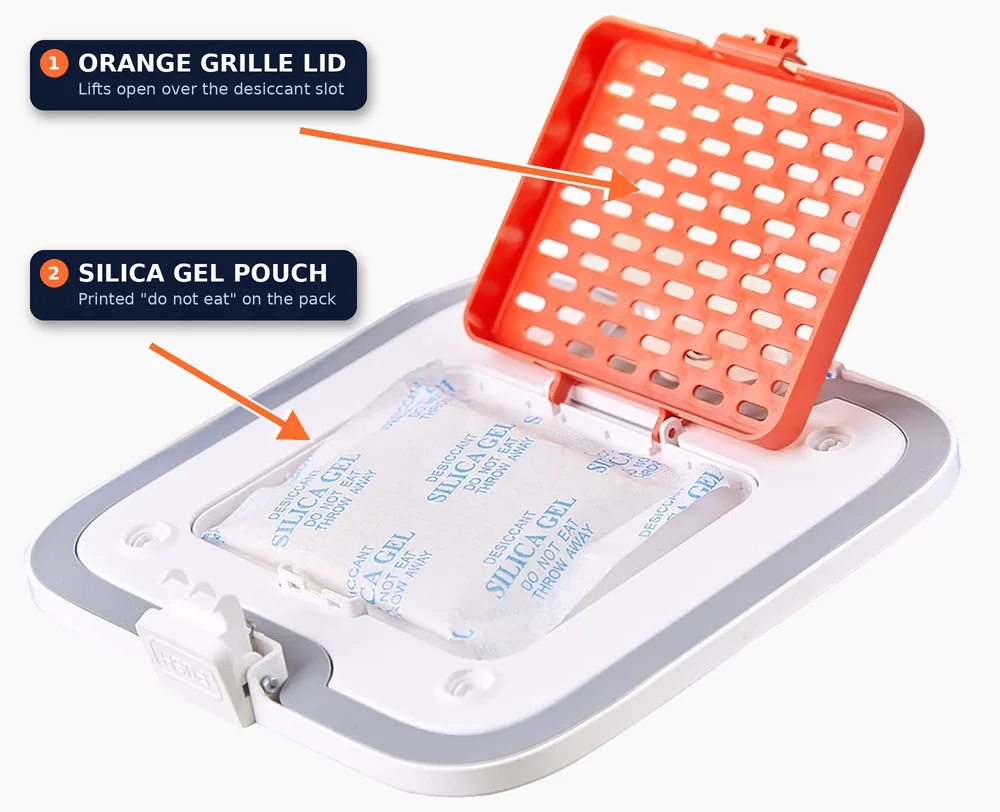
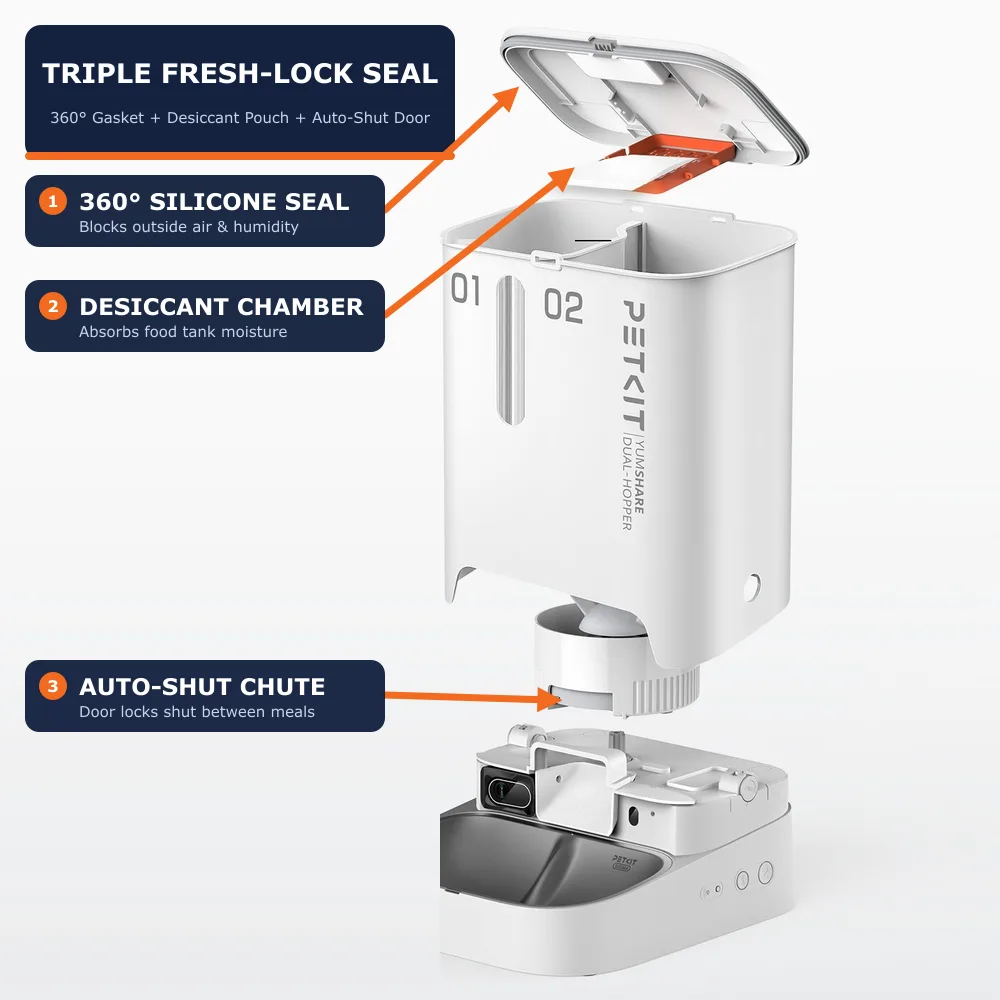
This matters more than it first seems. Damp kibble can bridge over the outlet and jam the dispensing parts, which is a common reason a feeder runs but drops nothing. Our guide to a PETKIT feeder not dispensing lists moisture and clumping among the causes. PETKIT’s lid also holds a desiccant compartment and a sealing ring for this reason.
How Often to Replace Feeder Desiccant: Petlibro vs. PETKIT vs. SwitchBot
There is no single interval. Each brand sets its own, and the bags themselves differ. Here is what each company publishes:
| Petlibro Granary 2 | PETKIT | SwitchBot | |
|---|---|---|---|
| Replacement interval | Every 14 days | 4 weeks per piece | App prompt at one month; varies with humidity |
| Bags per change | Two | One piece listed per cycle | Check your model manual |
| Listed pack size and price | 8 bags for $19.99 (one-time) | 5 pieces for $14.99 | Check SwitchBot’s store |
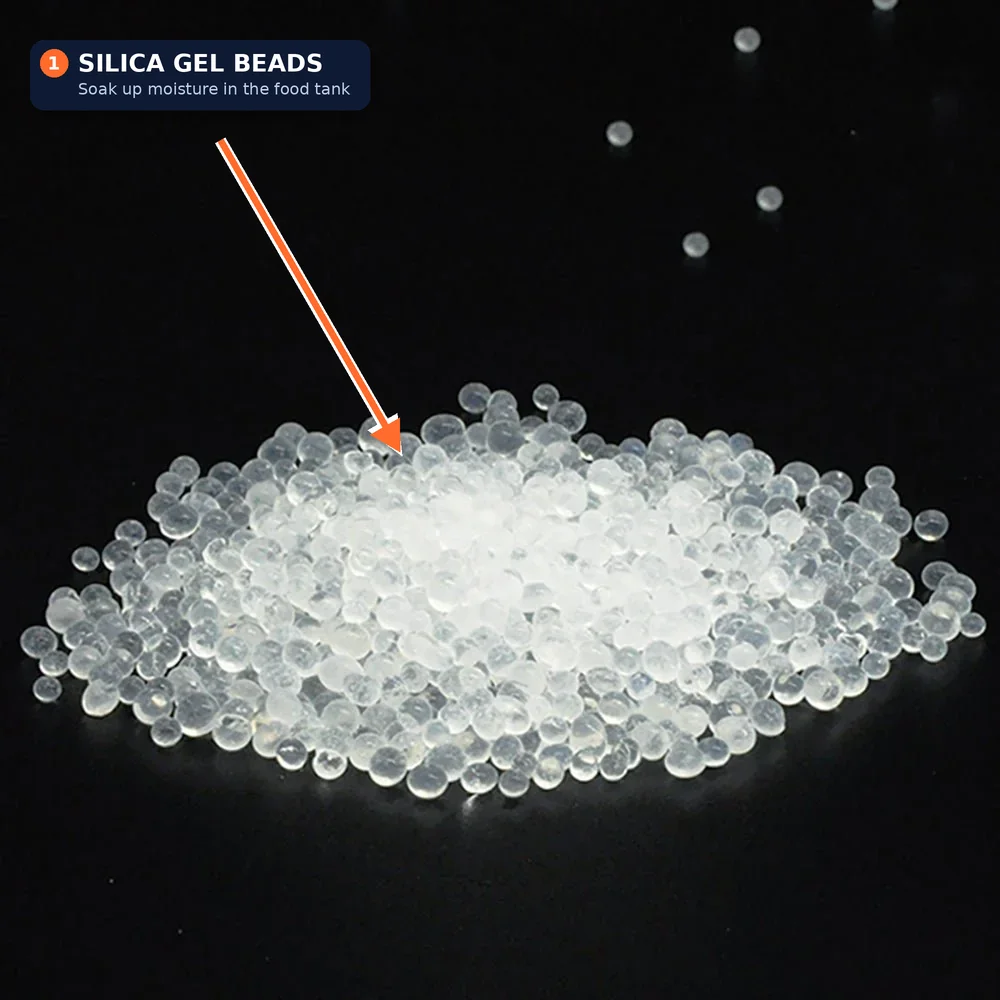
| Material listed | Calcium oxide granules | Silica gel, cobalt-chloride free | Proprietary moisture-absorbent pack |
| Compatibility | Granary 2 series only; not other Petlibro feeders | All PETKIT smart feeders | SwitchBot pet feeder |
| Replace sooner when | Bags are hard or damp | Check the manual | Humid conditions |
Comparison of smart feeder desiccant pack specifications. Pack pricing and intervals vary by hardware generation, as older Petlibro models use single-slot bags—always check your model’s manual.
How Much Does Desiccant Upkeep Cost?
The bags are cheap one at a time, but the Petlibro schedule adds up because it asks for two bags every two weeks. Using the listed prices above, Petmonik worked out a rough yearly figure:
Moisture control becomes even more important if you’re running a wet food feeder — see our guide on wet food automatic feeder safety.
- Petlibro Granary 2: two bags every 14 days is about 52 bags a year, roughly 6.5 eight-packs at $19.99, or about $130 a year at the one-time price. Petlibro offers subscription pricing, which lowers this.
- PETKIT: one piece every four weeks is about 13 a year, roughly 2.6 five-packs at $14.99, or about $39 a year.
Actual annual spend depends on local humidity and multi-pack or subscription discounts, assuming you follow the standard replacement intervals. If the cost bothers you, ask whether you really need the feature: see our guide to which AI pet feeder features are worth paying for.
Signs Your Feeder Desiccant Is Spent
Petlibro says to replace the packs earlier if they become hard or damp, and SwitchBot says real lifespan depends on weather and room humidity. Watch for these signs between scheduled changes:
- Hard or damp bags. This is Petlibro’s own trigger for an early change.
- Clumping kibble at the top of the hopper or around the outlet.
- A stale smell when you open the lid, even with a fresh bag of food.
- Humid weather or a damp room. SwitchBot says higher humidity uses the desiccant up faster.
- An app reminder. Petlibro says its app sends replacement reminders, and SwitchBot’s app counts down one month.
Why Replacing Feeder Desiccant on Time Matters
- Fresher food. Less moisture helps kibble stay crisp, which is the job Petlibro describes for its bags.
- Fewer jams. Dry, loose kibble is less likely to clump at the outlet.
- Less mold risk inside the hopper. Petlibro lists mold prevention as a reason for its desiccant.
- More reliable meals. A feeder that dispenses consistently needs dry food, particularly if you rely on it while travelling.
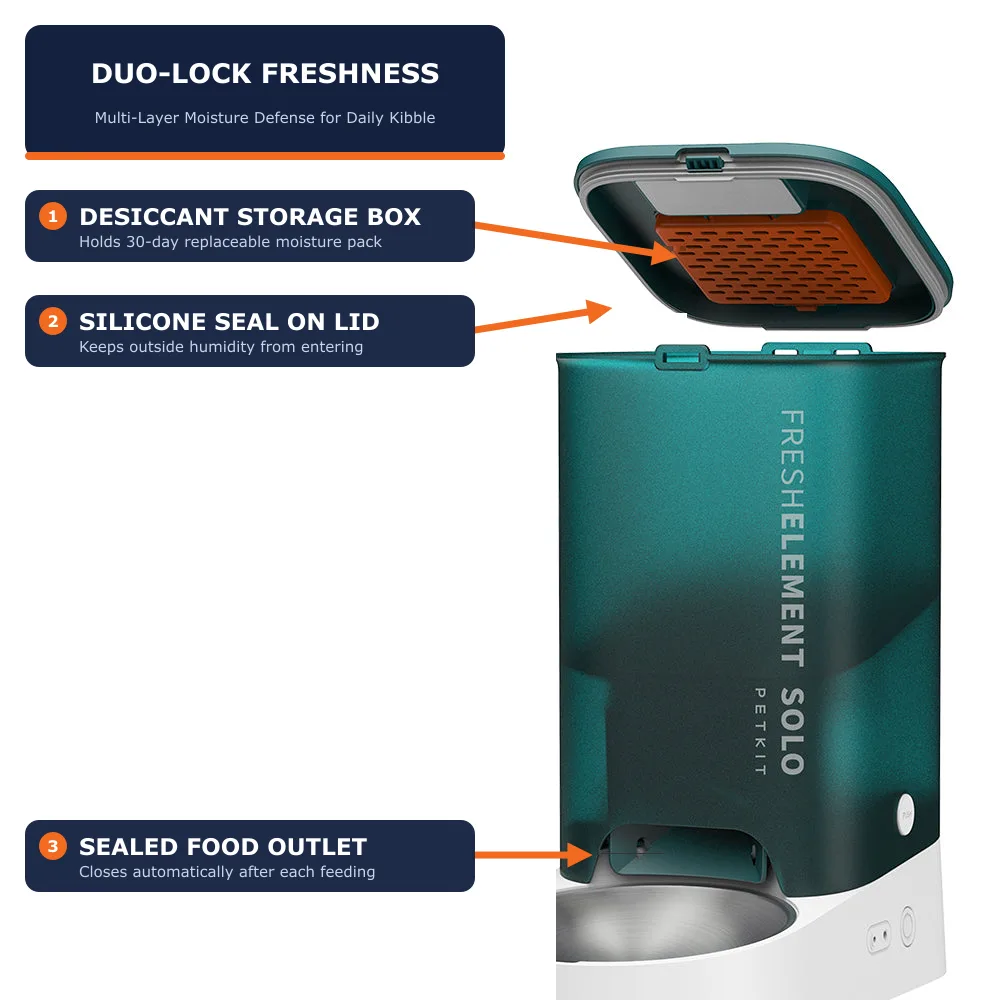
How to Replace the Desiccant Bags
The sequence below uses the dual-bag Petlibro Granary 2 layout; PETKIT and SwitchBot lids follow the same seal-and-reset routine, though slot locations vary by model.