

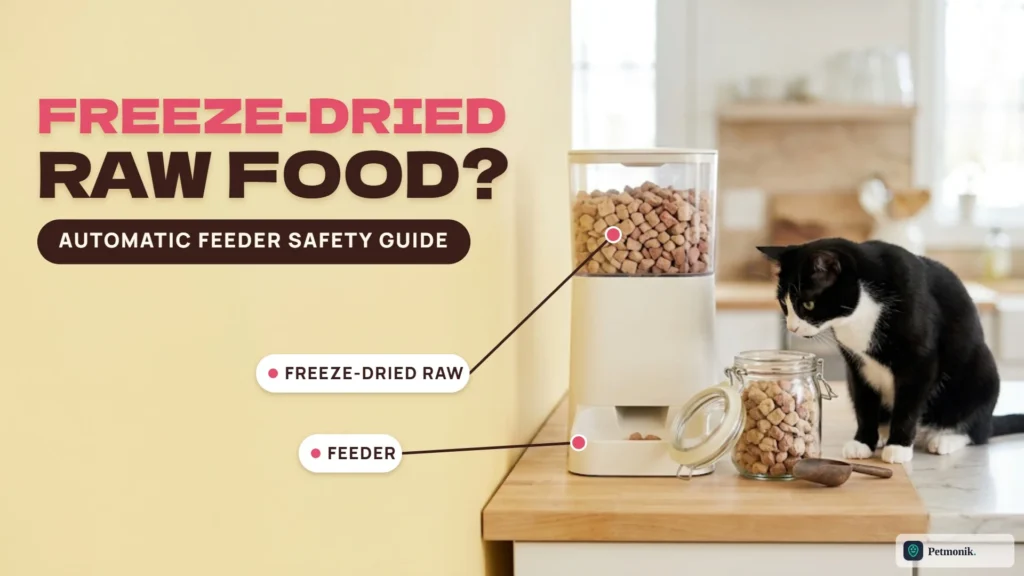
You switched your cat to freeze-dried raw, and now the one thing that made mealtimes easy, the automatic feeder, is sitting on the counter because you are not sure the food belongs in it. It is a fair worry. Freeze-dried nuggets are light, crumbly and hungry for moisture, while a feeder’s hopper is built for dry kibble. Using a freeze dried food automatic feeder setup is not impossible, but it comes with real jam, spoilage and food-safety trade-offs. Below we break down rotor size tolerances on Petlibro and PETKIT feeders, raw food-safety rules highlighted by Penn State Extension, and how to lower the risk of moisture spoilage and jams.
Quick Summary: Freeze-Dried Food in a Feeder
- Short answer: only if your feeder’s manual allows it, and with extra care. Most feeders are designed for dry kibble.
- Size limits matter. PETKIT limits freeze-dried pieces to 9 mm in its feeders, and Petlibro recommends dry kibble of 2 to 15 mm and warns that very irregular pieces can affect dispensing.
- Moisture is the enemy. Exposure to ambient humidity or water splashes can prematurely rehydrate freeze-dried raw nuggets and trigger mold or bacterial growth.
- Raw means handling rules. Penn State Extension, citing the CDC and FDA, says to wash hands and disinfect surfaces after handling raw pet food.
- Safer option: keep the feeder for kibble and add freeze-dried food by hand as a topper.
Table of Contents
Can You Put Freeze-Dried Food in an Automatic Feeder?
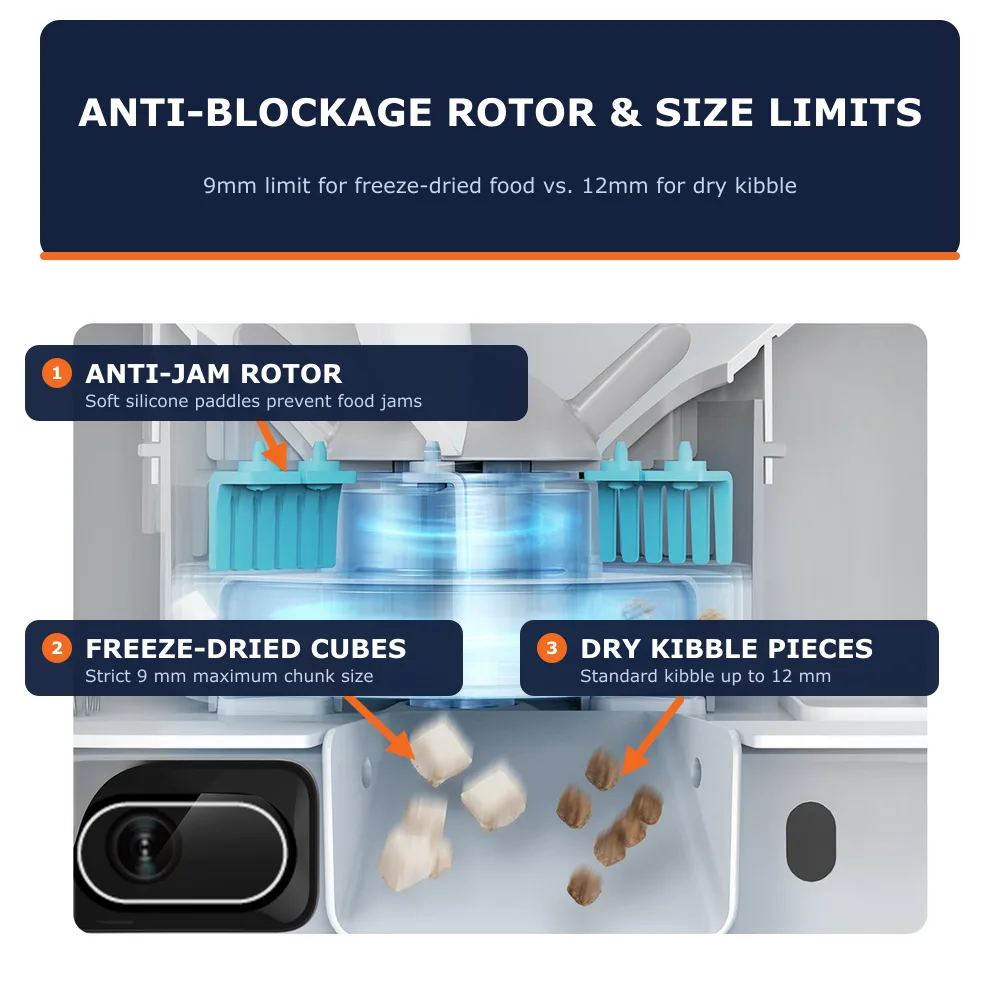
Sometimes, but not by default. Standard single-hopper automatic feeders are engineered primarily for extruded dry kibble rather than dedicated freeze-dried raw diets. Petlibro’s kibble-size page does not list freeze-dried food as unsupported, yet it says no automatic feeder can guarantee 100% compatibility with every kibble type. PETKIT goes further in its manual, which, as we cover in our PETKIT feeder not dispensing guide, sets a 12 mm limit for dry kibble and a 9 mm limit for freeze-dried pieces, and says only dry pet food belongs in the hopper. So the first rule is simple: read your own manual before you fill the hopper.
Why Freeze-Dried Raw Is Harder on a Feeder Than Kibble
- Moisture uptake. Porous freeze-dried nuggets absorb ambient moisture quickly and can rehydrate prematurely. A hopper that is opened often, or sits in a humid kitchen, gives it plenty of chances. This is why feeders ship with desiccant; see our guide to which feeder features are worth paying for.
- Irregular shapes. Petlibro says extremely irregular pieces can affect dispensing. Freeze-dried nuggets, patties and chunks vary in shape far more than moulded kibble.
- Crumbs and dust. Brittle pieces break into powder that settles in the dispensing parts and can build up over time.
- Size. Pieces over the limit can bridge over the outlet and jam it.
- Raw-food handling. A feeder hopper becomes a raw-food surface that you must clean and disinfect.
Freeze-Dried Food vs. Kibble in a Feeder: Limits at a Glance
| Petlibro feeders | PETKIT YumShare | |
|---|---|---|
| Recommended dry kibble size | 2 to 15 mm | Up to 12 mm |
| Freeze-dried pieces | Not listed as unsupported; irregular pieces can affect dispensing | Up to 9 mm |
| What goes in the hopper | Dry kibble; no guarantee for every type | Dry pet food only |
| Moisture protection | Replaceable desiccant bags | Desiccant compartment and sealing ring in the lid |
| Other factors named | Shape, oil content, moisture and density | Damp food clumps and sticks |
Comparison of dry-kibble and freeze-dried nugget tolerances across Petlibro and PETKIT hoppers. Exact chute clearances vary by sub-model—check your manual first.
Food Safety: What Raw Pet Food Means for Your Home
Freeze-dried raw food is often sold as raw, so treat it as raw. Penn State Extension lists Listeria, Salmonella, E. coli and Campylobacter among bacteria linked to raw or undercooked meat, and cites an FDA study in which 8% of raw food samples tested positive for Salmonella and 16% for Listeria. Because freeze-drying removes moisture via sublimation without cooking, it does not sterilize pathogens—which is why commercial freeze-dried raw diets carry the same safe-handling warnings as conventional raw meat.
Penn State, citing the CDC and FDA, recommends:
- Wash your hands with soap and water immediately after handling raw pet food.
- Disinfect every surface that touches it, including bowls and counters.
- Store raw pet food away from other food.
- Wash your hands after pet contact, and stop pets licking faces or open wounds.
In a feeder, that means the hopper, lid, bowl and any tray need regular cleaning, not just a wipe. Both organisations behind those recommendations discourage raw diets entirely, so if anyone in your home is vulnerable to infection, ask your doctor and your vet before using raw food at all.
How to Reduce the Risk If You Still Want to Try It
If your feeder manual permits small freeze-dried pieces, follow these five precautions to minimize dust buildup, bridging, and moisture exposure.
Step 1: Check Your Manual and Piece Size
Measure a few pieces. If any exceed your feeder’s freeze-dried limit (PETKIT lists 9 mm), break them up or choose a smaller-format food.
Step 2: Remove Crumbs and Dust
Sift or shake the food over a bowl before loading it so powder does not reach the dispensing parts.
Step 3: Fill Only What You Need
- Load a day or two of food, not a full hopper.
- Use a fresh desiccant bag on the maker’s schedule.
- Keep the lid closed and sealed between meals.
Step 4: Do Not Let the Bowl Sit
Once rehydrated or exposed to saliva in the bowl, freeze-dried raw food should sit out for no more than about an hour before leftovers are discarded or refrigerated. Remove uneaten food promptly instead of letting the feeder refill a bowl that is already full.
Step 5: Clean the Hopper and Bowl Thoroughly
Empty the hopper, wash the removable parts with soap and water and disinfect surfaces that touched the food. Inspect the chute and hopper walls for sticky residue, sour odors, or color changes—all early signs of spoilage.
Warning Signs Your Feeder Is Struggling
If you do use freeze-dried pieces, watch for these signs in the first week and stop if you see them:
- Smaller portions than you set. If the bowl is regularly light, pieces may be catching in the outlet.
- Powder under or around the outlet. That is crumbled food working its way into the mechanism.
- Motor noise or a motor that runs without dropping food. PETKIT says its feeders send an app alert when food jams, so check your notifications before taking anything apart.
- Soft or sticky food in the hopper. That points to moisture, so empty the hopper, replace the desiccant and stop using freeze-dried food in it.
A missed meal is the real cost of a chute jam, so never rely on freeze-dried pieces during a trip until the feeder has dispensed them cleanly for several consecutive days.
Better Ways to Use a Feeder With Freeze-Dried Food
- Kibble in the feeder, freeze-dried by hand. Add freeze-dried pieces as a topper at mealtimes when you are home.
- Use a feeder designed for fresh food. Our guide to wet food automatic feeder safety explains temperature and preservation limits for moist foods.
- Split roles. Use scheduled kibble meals for the times you are away and keep raw for the meals you can supervise.
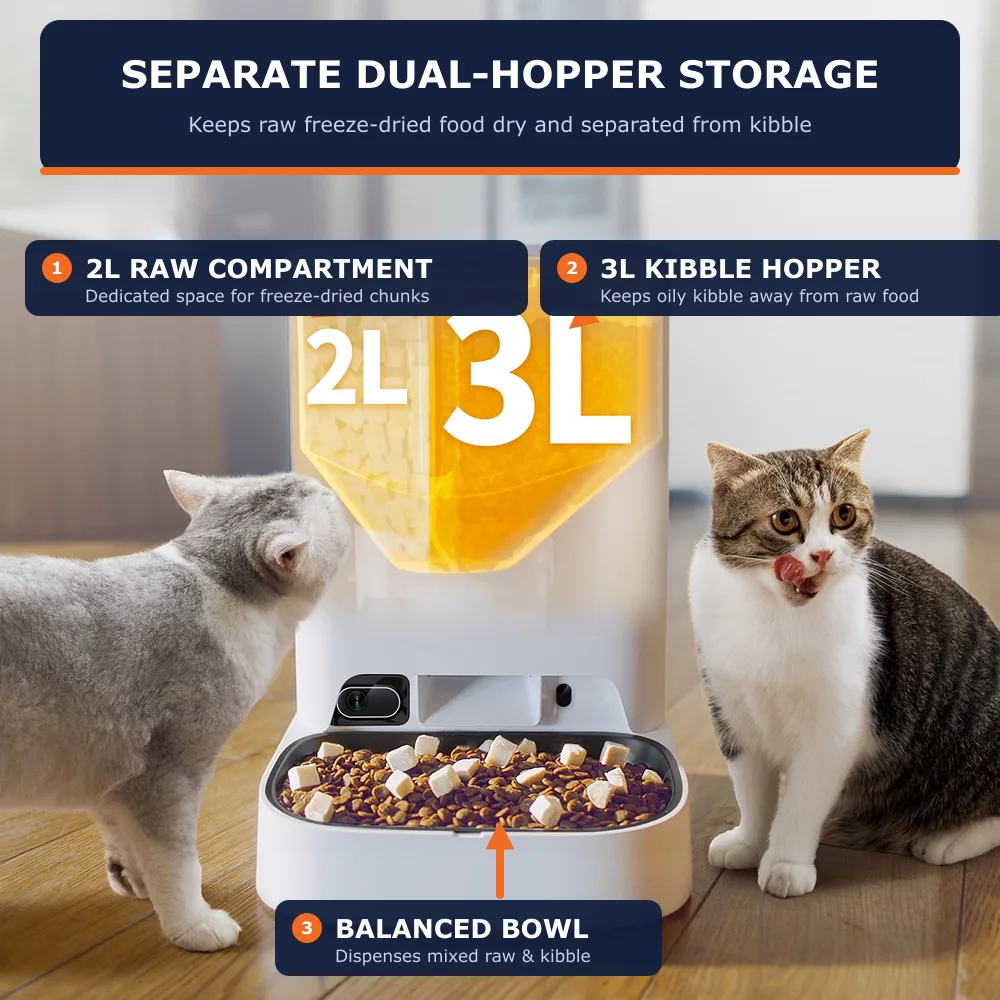
The bottom line: a standard dry-food feeder is not built for freeze-dried raw, so size, moisture and raw-handling rules all matter. If your manual does not allow it, keep the feeder for kibble. Petmonik will update this guide as brands publish clearer freeze-dried guidance; if you have a manufacturer statement we missed, tell us through our contact page. This guide is general information, not veterinary advice.
Frequently Asked Questions
Can you put freeze-dried food in an automatic feeder?
Only if your feeder’s manual allows it. PETKIT sets a 9 mm limit for freeze-dried pieces and says only dry food belongs in the hopper, while Petlibro says no feeder guarantees compatibility with every food type. Otherwise keep freeze-dried for hand feeding.
Does freeze-dried food jam a pet feeder?
It can. Petlibro says irregular pieces can affect dispensing, and brittle freeze-dried food can crumble into dust that builds up in the dispensing parts. Oversized pieces can bridge over the outlet.
Is freeze-dried raw cat food safe to leave in a feeder?
It needs care. Ambient moisture can prematurely rehydrate freeze-dried nuggets and trigger mold or bacterial growth, and rehydrated raw food should be eaten within about an hour. Load only a day or two of food and keep the hopper sealed.
Does freeze-drying kill bacteria in raw pet food?
No—freeze-drying removes moisture without heat cooking, and Penn State Extension warns of Salmonella and Listeria risks in raw pet foods. Treat freeze-dried raw as raw and follow handling rules.
What is the best way to feed freeze-dried food with an automatic feeder?
Use the feeder for kibble and add freeze-dried food by hand as a topper when you are home. That avoids moisture, jam and raw-handling problems inside the hopper.