

You lift the lid on your cat’s fountain and find a pink-grey film on the spout, a gritty ring around the pump, and a motor that has gone from a hum to a rattle. That slime is why the water can taste off, and it builds up where a quick rinse never reaches. If you want to clean a smart pet fountain pump properly, the fix is a ten-minute teardown, not a new fountain. This walkthrough breaks down magnetic impeller disassembly, vinegar descaling, and biofilm scrubbing for both cabled and wireless fountain pumps. Part names and magnet housings differ slightly by model, so keep your manual beside you. This guide covers how to clean smart pet fountain pump parts without damaging them.
Quick Summary: Clean the Pump, Not Just the Bowl
- How often: Petlibro says to take apart and clean the pump at least every two weeks. PetSafe says monthly, or every two weeks with more than one pet. Clean sooner in hot, humid weather.
- What works: warm water, soap and a small brush. For white mineral crust, soak the pump parts in white vinegar (15 to 30 minutes per Petlibro; 15 minutes in equal parts vinegar and warm water per PetSafe).
- What to avoid: unofficial filters (Petlibro says they can clog the fountain) and putting the pump back without its small impeller cap.
- Time needed: about 10 to 15 minutes, plus soak time.
Table of Contents
Why Pet Fountains Get Slimy and Moldy
The slippery film in a water bowl is biofilm: a sticky layer of bacteria, yeast and debris that clings to wet surfaces, as the American Kennel Club explains, and it sticks to rough surfaces most easily. Petlibro notes that plastic scratches and can hold bacteria more readily than stainless steel or ceramic. A fountain adds more places for it to hide: the pump chamber, the impeller, the silicone tube and the splash guard. The usual triggers are:
- Saliva and food particles that drop into the reservoir each time your pet drinks.
- Warm, humid rooms. In hot, humid weather, biofilm multiplies rapidly and can require cleaning every few days.
- Hard water. Petlibro recommends vinegar for the calcium that builds up on the impeller and in the pump cavity.
- Stale filters left in past their change date.
- Dirty splash guards that let dust and debris reach the water.
Slime and debris harbour bacteria and mold, so a regular teardown protects the pump and the water your pet drinks. If your cat is drinking less than usual, see our piece on smart water fountain hydration tracking and talk to your vet about any change in thirst.
Tools Needed to Clean a Smart Pet Fountain Pump
You do not need special equipment. Gather these before you unplug anything:
- A small brush. Many fountains ship with a cleaning brush; a clean toothbrush or bottle brush also works.
- Cotton swabs for the pump chamber and spout, and tweezers for delicate parts such as the impeller.
- White vinegar for descaling hard-water crust.
- Dish soap and warm water. Use plain soap and rinse thoroughly.
- A small bowl for soaking, and a towel for drying.
- A replacement filter from the fountain’s own brand.
- A sink plug or a container for parts. PetSafe warns that small pump parts can be lost down the drain.
How to Clean a Smart Pet Fountain Pump, Step by Step
The sequence below covers standard cabled pumps such as the Petlibro Dockstream and PetSafe Drinkwell series. Always check your model’s manual before prying covers loose, as clip tabs and magnet housings vary.
Step 1: Unplug the Fountain and Empty It
Disconnect the power cord from the fountain before you touch any parts, then pour out the remaining water and take out the filter.
- Unplug the fountain from the wall or power source.
- Pour out the water and remove the filter. Set it aside to inspect later.
- Put a plug in the sink or keep a container nearby, because PetSafe warns that small pump parts can be lost down the drain.
Step 2: Take Out the Pump and Disassemble It
Lift the pump out of the base and take it apart, laying the parts out in the order they came off.
- On a Petlibro Dockstream the working parts stack in order: impeller, then the small impeller cap, then the pump cover.
- On the PetSafe pump, use a small tool to lift the faceplate, lift the stator out by its lip and pull the impeller up from beneath the disk.
- Expect some resistance: PetSafe notes the impeller is held by a magnet.
Step 3: Soak Away Mineral Buildup
White or chalky crust is hard-water scale, and vinegar loosens it.
- Soak the impeller and pump cavity in white vinegar for 15 to 30 minutes (Petlibro).
- Or use equal parts vinegar and warm water for 15 minutes, then scrub (PetSafe).
- Use the longer soak if the fountain has run for weeks in hard water.
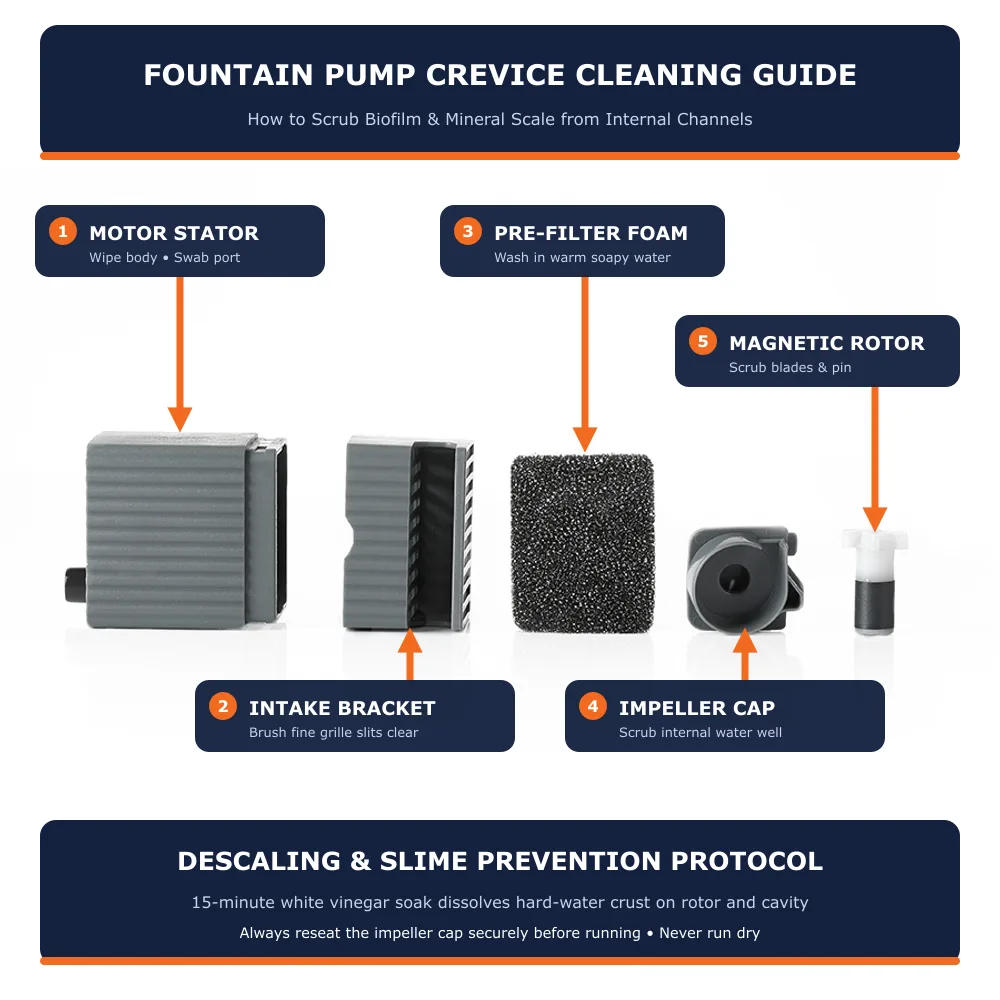
Step 4: Scrub the Slime Out of Every Crevice
This is the step that stops the slime coming back quickly.
- Wash every pump part in warm soapy water with a small brush.
- Use cotton swabs in the pump cavity and narrow channels, and tweezers for delicate parts.
- Check the silicone water pipe for blockages, which Petlibro lists as a cause of a fountain that won’t dispense.
- Rinse completely so no soap or vinegar remains.
Step 5: Clean the Fountain Body, Splash Guard and Spout
The pump is only part of the job.
- Wash the reservoir, filter tray, lid and splash guard with soap and warm water.
- Wipe the spout and any channels the water runs through.
- Pet-bowl guides suggest washing bowls daily and disinfecting weekly, and the same logic applies to the wide, easy-to-reach fountain parts.
- Air-dry everything on a clean towel.
Step 6: Reassemble in the Right Order and Test
Reverse the order you took it apart in.
- On a Petlibro Dockstream, rebuild as impeller, impeller cap, then pump cover. Petlibro says the pump cannot build enough pressure without the impeller cap.
- Fit a fresh filter from the same brand, refill the water and plug the fountain in.
- Allow five minutes or more for the motor to start after a refill, as Petlibro notes, and watch the first few minutes of running.
How to Clean a PETKIT Eversweet Fountain Pump
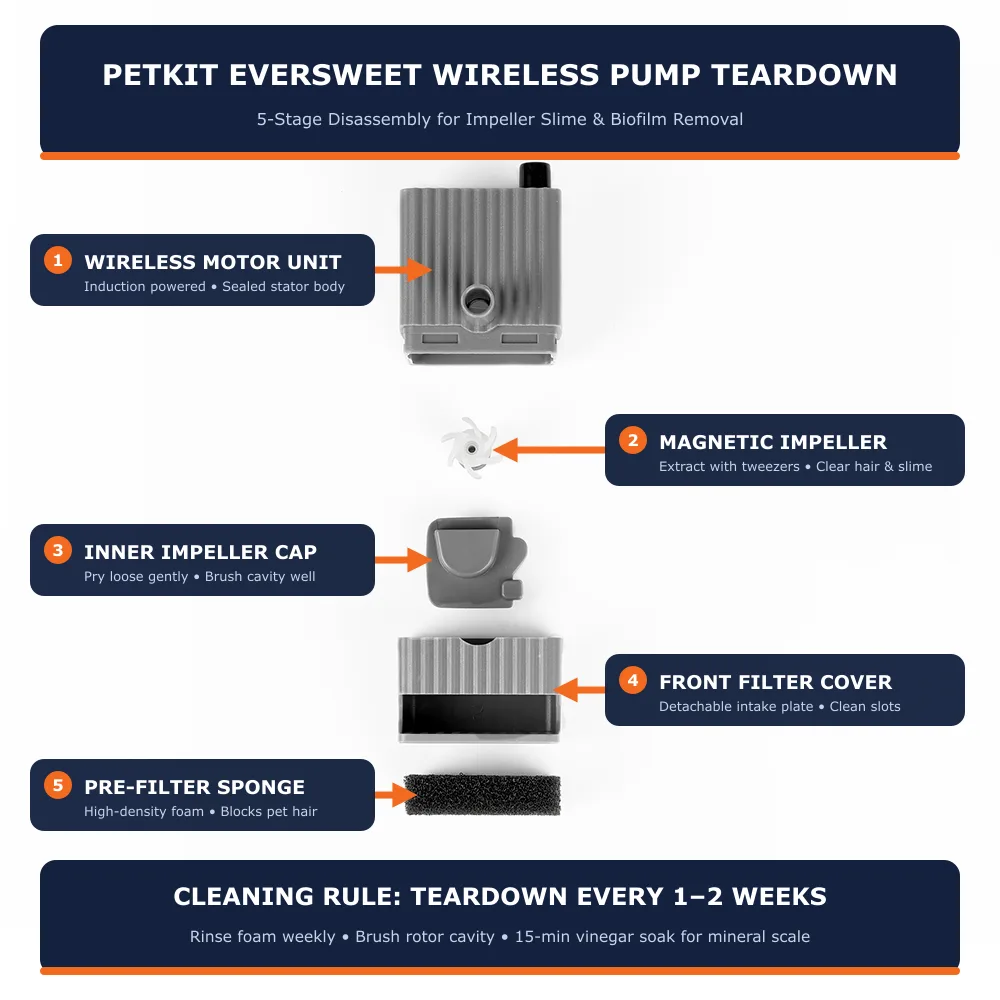
PETKIT Eversweet models use a specialized wireless water pump, so the teardown differs from the cabled pumps described above. Hair and slime collect on the impeller and in the pump cavity, and that buildup is what makes the pump fail, so this is where your small brush matters most.
PETKIT Pump Cleaning Steps
- Take the pump out of the water tank. Empty the fountain first so the pump comes out cleanly.
- Pry off the front filter cover. Work it loose gently so you do not crack the clips.
- Pry off the inner impeller cover. This exposes the impeller and the cavity behind it.
- Pull out the magnetic impeller. It is held by a magnet, so expect a little resistance.
- Clean the impeller and the pump cavity thoroughly with a tiny brush. Pay close attention to hair and slime, since these are what cause the pump to fail.
- Rinse and reassemble. Refit the impeller, the inner impeller cover and the front filter cover, put the pump back in the tank and refill with water.
Model details can differ across the Eversweet range, so check your PETKIT manual for the exact cover and clip layout. If mineral crust is also present, the vinegar soak described earlier in this guide can be used on the impeller and cavity; confirm in your manual that vinegar is suitable for your model.
How Often to Clean Your Pet Fountain
| Task | Suggested frequency | Reference / Standard |
|---|---|---|
| Pump teardown and cleaning | At least every two weeks | Petlibro Dockstream schedule |
| Pump cleaning, one pet | Monthly | PetSafe |
| Pump cleaning, multiple pets | Every two weeks | PetSafe |
| Hot, humid weather | Every few days if slime appears | Warm-climate hygiene standard |
| Plain bowls (not fountains) | Wash daily, disinfect weekly | Standard pet-bowl hygiene |
Recommended baseline intervals across major fountain brands. Your model’s manual takes priority, and any sign of slime, odor, or discoloration means an immediate clean is due.
How to Keep Slime and Mold From Coming Back
- Use only official filters. Petlibro warns that non-branded filters can clog and stop water dispensing.
- Choose smooth materials. Stainless steel and ceramic scratch less than plastic and resist buildup better, according to Petlibro.
- Change the water often. Refresh the reservoir regularly rather than only topping it up.
- Check the splash guard regularly. It blocks hair and airborne dust from dropping into the reservoir, so wipe it down at every clean.
- Clean at the first sign. A cloudy reservoir, a smell, or a pump that sounds louder than usual means it is due.
If you are building out a full setup, our guide to a feeder, camera and fountain bundle for solo travelers covers fountains that remind you when to refill or change the filter.
When to Replace the Pump or Contact Support
If the pump still rattles, runs dry or won’t start after a full clean, check three things: the cord (try it with another device), the pump cover and tray seating, and the silicone tube. If those are fine, contact the manufacturer with your model number and a short video of the problem. Many brands sell replacement pumps, which can cost less than a new fountain.
Once the pump is clean, two follow-up reads can help: our look at whether cats really drink more from flowing water and our comparison of stainless steel and plastic fountains for hygiene.
The bottom line: most smart fountain problems come from a dirty pump, not a faulty one. A scheduled clean, a vinegar soak when crust appears and an official filter keep the water fresh. Petmonik will update this guide as brands change their designs; if a step differs on your model, tell us through our contact page.
Frequently Asked Questions
How do I clean a smart pet fountain pump?
Unplug the fountain, remove the pump, take it apart and scrub every part with warm soapy water and a small brush. Soak mineral crust in white vinegar, rinse well, then reassemble in the manufacturer’s order and run it with a fresh filter.
How often should I clean my cat’s water fountain pump?
Petlibro advises cleaning the pump at least every two weeks. PetSafe suggests monthly for one pet and every two weeks for multi-pet homes. Clean sooner if you see slime, smell an odor or live in a hot, humid climate.
Can I use vinegar to clean a pet fountain pump?
Yes. Petlibro recommends soaking the impeller and pump cavity in white vinegar for 15 to 30 minutes to remove hard-water buildup, and PetSafe suggests equal parts vinegar and warm water for 15 minutes. Wash the parts in soap and water afterward and rinse fully.
Why is my pet fountain slimy even after I wash it?
The film builds up in places a quick rinse misses, such as the impeller, pump chamber and silicone tube. Disassemble the pump and brush every crevice. Plastic surfaces can scratch and hold buildup more than stainless steel or ceramic, so consider a smoother material.
Why is my pet fountain pump not working after cleaning?
Check that the impeller cap is in place, since Petlibro says the pump cannot build pressure without it, and that the pump cover is secure. Allow five minutes or more for the motor to start after a refill, and inspect the silicone pipe for blockages.