

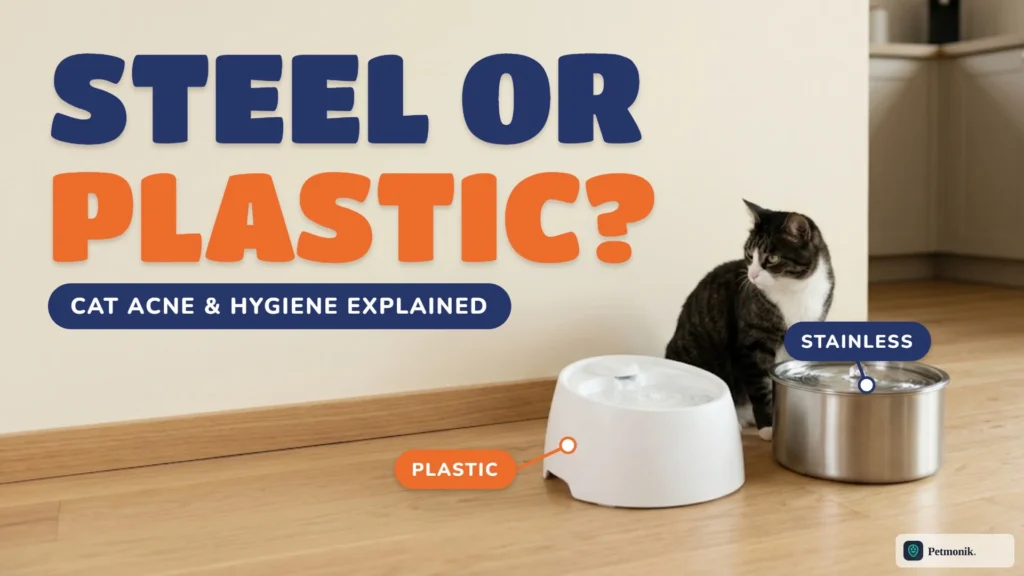
Little black dots on your cat’s chin, a crusty rim around the lower lip, and a plastic fountain you have used for two years. Search the internet and the answer seems obvious: throw out the plastic. Reality is messier. Veterinary sources describe the plastic link as a theory or an association, not a proven cause, and most fountains are a mix of materials anyway. If you are weighing stainless steel vs plastic cat fountain designs, this guide explains what is actually known about feline acne, why surfaces matter for hygiene, which parts of a fountain touch your cat’s face, and how to choose without falling for marketing. Below we break down how surface porosity, mixed-material fountain designs, and cleaning schedules affect feline chin health in daily use.
Quick Summary: Stainless Steel or Plastic for Cat Acne and Hygiene
- Plastic and chin acne is a suspected link, not a proven cause. FirstVet describes a possible correlation and lists stress, allergies, grooming, hormones and food sensitivities as other factors.
- The hygiene argument is reasonable. PETKIT and Petlibro both say plastic can develop tiny scratches that hold bacteria, while stainless steel resists them better.
- The tray is what matters most. Many fountains, including Petlibro’s Dockstream 2, use a stainless steel tray with a plastic (ABS) tank.
- Cleaning beats material. A clean plastic fountain is better than a dirty steel one.
- See a vet if acne persists. Severe cases can need prescription treatment.
What Is Feline Acne, and What Causes It?
Feline acne shows up as blackheads and small bumps on the chin and lips. FirstVet says it happens when hair follicles around the oil glands become clogged, and that the exact mechanism is still unclear. The factors it lists include:
- Plastic food and water bowls, described as a possible correlation, “quite possibly an allergy.”
- Poor grooming.
- Stress.
- Allergies.
- Hormones.
- Immune problems.
- Food sensitivities.
FirstVet’s advice is to swap plastic bowls for stainless steel or glass, clean bowls regularly (it suggests daily), and clean the chin with a vet-approved product. If home care does not work after a reasonable time, it recommends seeing a vet, who may prescribe antibiotics, topical treatment or anti-inflammatories.
Is Plastic Really the Cause?
Here is the honest answer: probably not on its own. Veterinary dermatology guidance treats plastic contact as a contributing trigger rather than a standalone cause, alongside stress, grooming habits, and environmental or food allergies. Even without randomized bowl-material trials, swapping out scratched plastic dishes remains one of the first steps veterinarians recommend because it is simple, inexpensive, and removes both surface bacteria and potential contact sensitizers at once.
That is why Petmonik does not claim that plastic causes acne or that steel cures it. The sensible reading is that a smooth, easy-to-clean surface removes one possible irritant while you look for others.
Why Material Matters for Fountain Hygiene
The mechanism that manufacturers describe is physical, not magical:
- Scratches. PETKIT says plastic develops microscopic scratches that give bacteria a place to hide. Petlibro makes the same point about scratched plastic holding bacteria more readily than stainless steel or ceramic.
- Biofilm. PETKIT lists biofilm buildup in still water and infrequent cleaning among the common contributors.
- Ceramic cracks. PETKIT notes ceramic is generally safer but can crack over time, which creates the same hiding places.
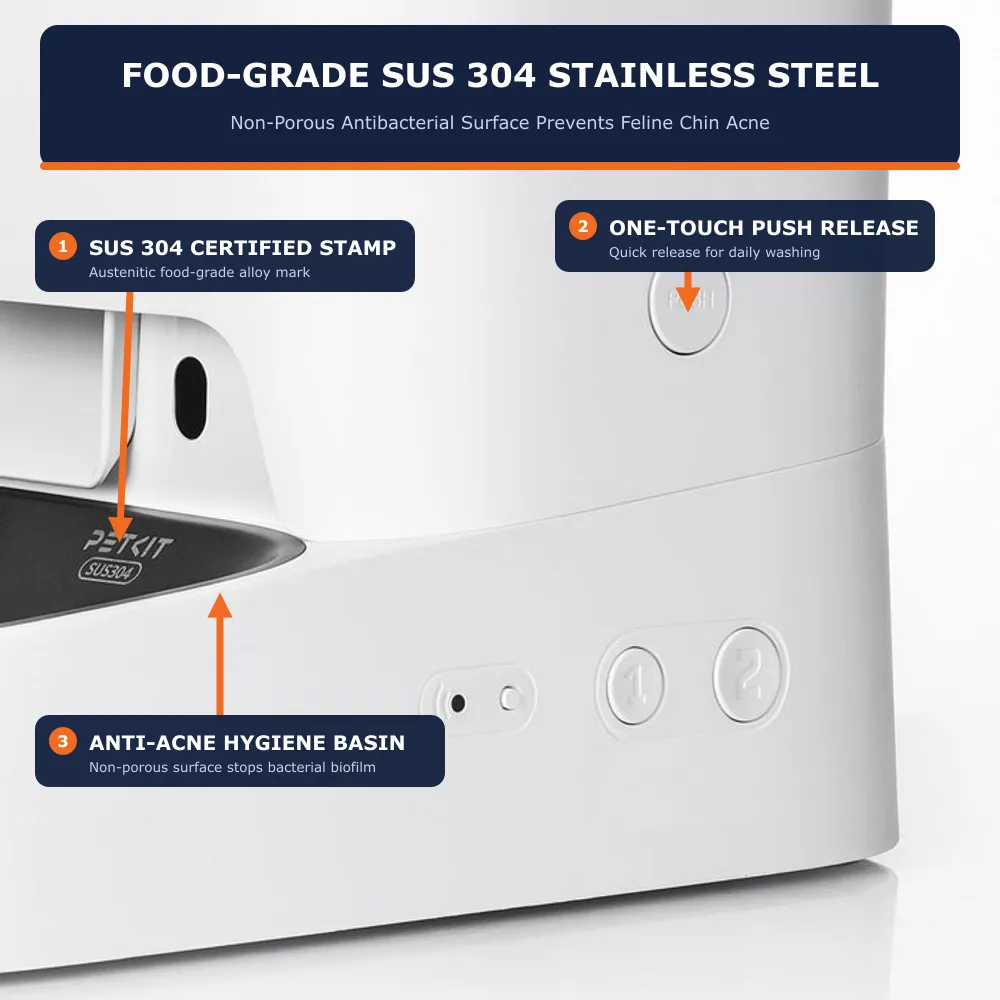
- Non-porous alloy. Food-grade 304 stainless steel is non-porous and tolerates hot water and dishwashing without micro-crazing, making biofilm much easier to wipe away than on aged plastic.
While switching to a non-porous basin cannot prevent hormone- or allergy-driven flare-ups on its own, it eliminates rough micro-grooves where lipid residue and skin bacteria accumulate right against your cat’s lower lip.
Stainless Steel vs Plastic Cat Fountain: Side-by-Side Comparison
| Factor | Stainless steel | Plastic |
|---|---|---|
| Scratch resistance | Resists scratching and keeps a smooth surface | Can scratch, and scratches can hold bacteria |
| Hygiene | Easier to wipe clean; dense surface | Can be kept clean but needs more attention as it ages |
| Link to chin acne | Suggested as a safer choice; not proven | Suspected association; not a proven cause |
| Durability | Resists cracking, warping, and UV yellowing | Can scuff, discolor, or warp under high heat over time |
| Weight and stability | Usually heavier, harder to tip | Lighter and easier to move |
| Cost | Typically higher | Typically lower |
| Best for | Cats with chin acne or sensitive skin; hygiene-focused owners | Budget setups when cleaned often |
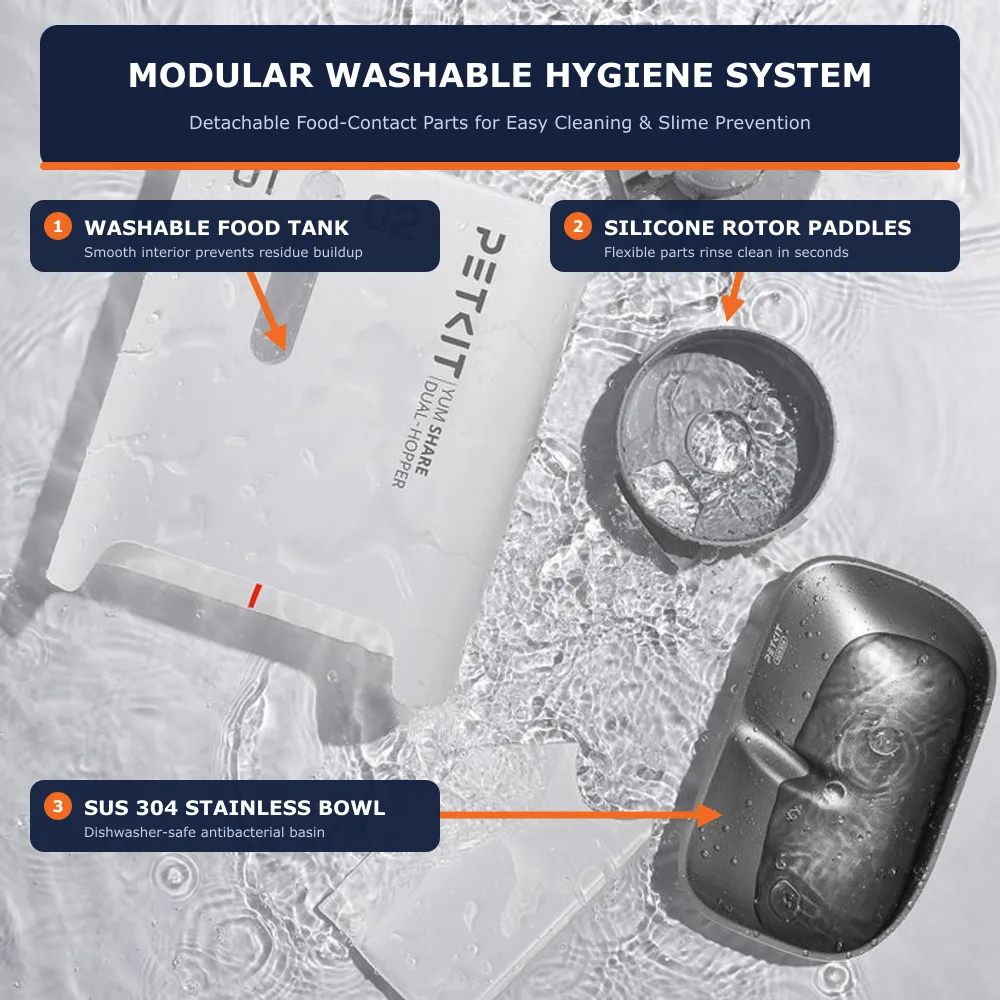
Most smart fountains combine materials, typically pairing a 304 stainless-steel top drinking tray with a BPA-free ABS reservoir underneath, so check which parts actually contact your cat’s chin.
The Catch: Most Fountains Mix Materials
Few fountains are all steel. Petlibro’s Dockstream 2, for example, lists a stainless steel water tray and an ABS plastic tank, plus a four-layer filter that the brand says should be replaced every two weeks. Pumps, spouts and covers are usually plastic too. So when you compare stainless steel vs plastic cat fountain models, ask which parts touch your cat’s chin and the water:
- The drinking tray or basin. This is the surface your cat’s chin touches, so this is where steel matters most.
- The water tank. It holds the water but is not touched by the chin.
- The pump and spout. These are in constant contact with water and collect slime, so cleaning access matters more than material.
- The filter housing. Replace filters on schedule.
If the pump is where slime builds up, see our guide to cleaning a smart pet fountain pump. The material of the tray will not help if the pump is neglected.
How to Choose a Fountain Material: A Checklist
- Ask which parts are steel. A stainless tray is the most relevant for chin contact.
- Look for a smooth, seamless basin without crevices where residue collects.
- Check that you can disassemble it. A fountain you can take apart gets cleaned more.
- Prefer a wide basin if your cat dislikes whisker contact; see our whisker fatigue fountain guide.
- Verify food-grade 304 stainless steel. Major brands like PETKIT and Petlibro use food-grade 304 (SUS 304) stainless steel for their drinking trays, whereas unbranded budget fountains sometimes substitute lower-grade 201 steel that can pit or rust.
- Budget for filters. Petlibro says to replace the Dockstream 2 filter every two weeks.
If you are choosing a fountain to track drinking too, our smart fountain hydration tracking guide compares the connected options.
A Hygiene Routine That Matters More Than Material
| Task | How often | Source |
|---|---|---|
| Rinse the drinking surface | Daily | PETKIT |
| Full disassembly and cleaning | Every 1 to 2 weeks | PETKIT |
| Change the filter | Every 2 weeks (Dockstream 2) | Petlibro |
| Clean the cat’s chin | As your vet advises | FirstVet suggests antibacterial soap or pads, then a vet if no progress |
| Refresh the water | Regularly, not just topping up | General guidance |
PETKIT is careful to say a fountain is part of an environmental fix, that results vary by cat, and that it should not be seen as a guaranteed solution. We agree.
When to See a Vet About Cat Acne
- Home care has not helped after a reasonable period.
- The chin looks swollen, bleeding or infected.
- Your cat is scratching or pawing at the area.
- The spots keep returning.
A vet can rule out other skin conditions and, where needed, prescribe treatment. Do not squeeze the spots at home.
To see which fountains fit a wider setup, check our feeder, camera and fountain bundle guide.
The bottom line: stainless steel is a sensible choice for the part of the fountain your cat’s chin touches, and a good habit if you are chasing chin acne, but it is not a proven cure and plastic is not proven to cause it. Choose a fountain with a steel tray you can take apart, clean it on schedule and see your vet if the acne stays. Pair a 304 stainless-steel drinking tray with weekly pump and basin scrubbing for the cleanest possible hydration station.
Frequently Asked Questions
Is stainless steel better than plastic for a cat fountain?
Stainless steel resists scratches and is easier to keep clean, which is why vets and fountain brands recommend it. It is not proven to prevent acne, but it is a low-risk choice.
Do plastic fountains cause cat acne?
Not proven. FirstVet describes a possible correlation with plastic bowls and lists stress, allergies, grooming and other factors as well.
Can a stainless steel fountain cure cat chin acne?
No guarantee. PETKIT says a fountain can be part of an environmental fix but results vary by cat. See a vet if the acne persists.
Are fountains with a plastic tank okay?
Often yes. Many fountains, including the Petlibro Dockstream 2, pair a stainless steel tray with an ABS tank. The tray is the part your cat’s chin touches.
How often should I clean a cat water fountain?
PETKIT advises rinsing the drinking surface daily and doing a full disassembly clean every 1 to 2 weeks.
When should I take my cat to the vet for acne?
If home care does not help, if the chin looks swollen, bleeding or infected, or if the acne keeps coming back.