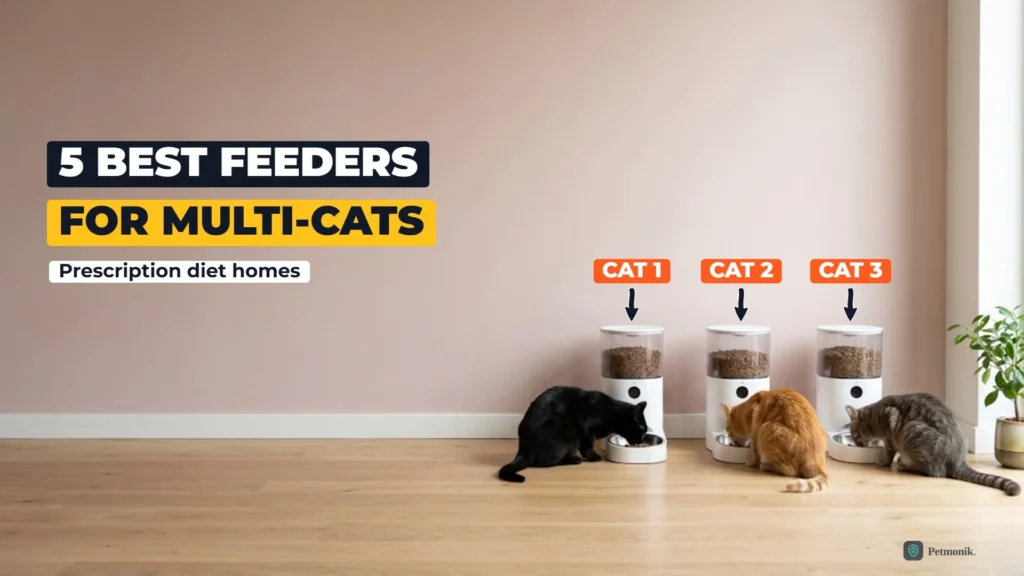
The feeders that actually protect a prescription diet are the ones that can lock a bowl to a single cat — we ranked those first below, followed by two that are useful for tracking but can’t protect a diet on their own. A prescription diet only works if the right cat eats it, all of it, and nobody else does; in a multi-cat home that’s hard to guarantee, since a fast eater often finishes its own bowl and moves on to the renal or urinary food while the patient fills up on whatever’s left. Most smart feeders make this worse, not better, because they put food out on a timer for whichever cat turns up first.
Table of Contents
Best Smart Feeder for Multiple Cats Prescription Diet: How We Chose
We ranked each feeder on how well it protects one cat’s diet in a shared home. Our criteria, in order of weight:
Access control. A lid that opens only for a registered pet, whether it recognises an RFID collar tag or the microchip your cat already has. This matters more than anything else on the spec sheet, which is why the two feeders without it rank last.
Portion accuracy and intake records. Built-in scales and per-pet logs tell you, and your vet, how much the patient actually ate.
App reliability. We weighed owner reports of connection problems, hidden hub requirements and subscriptions.
Food type and total cost. Wet or dry food, and the full price including hubs, add-ons and plans.
Our rankings evaluate hardware engineering specifications, lid-locking mechanics, companion app ecosystems, and verified long-term multi-cat household reports. Prices are list prices at the time of writing and change often. One caution applies to every pick: a selective feeder protects the diet cat’s bowl, but the diet cat can still eat from an open bowl, so feed the others at set times or in another room. Agree any feeding change with your vet.
Source: PETKIT
S
1. Best Overall — SureFeed Microchip Pet Feeder Connect
$239.40 list (Hub sold separately)
The Connect is a lidded bowl that opens only for pets you register, using the microchip your cat already has or a SureFlap RFID collar tag. It takes wet or dry food, and built-in scales help you serve portions to within 1 g and record how much each pet eats, which you can then share with your vet through the Sure Petcare app.
For a prescription diet, that combination is hard to beat: the patient eats, other cats are shut out, and you get the intake data. Owners at Chewy rate it 3.7 out of 5 across 105 ratings, praising it for special diets but criticising the extra cost of the Hub (required for the app), slow lid-close settings and some inaccurate weight readings. It doesn't dispense food; you fill the bowl yourself.
SureFeed Microchip Pet Feeder Connect key specs
Identifies
Implanted microchip or SureFlap RFID collar tag
Food
Wet and dry
Bowl
400 ml
Intake tracking
Built-in scales, Sure Petcare app
Connectivity
Requires the Sure Petcare Hub (sold separately)
Power
4 C batteries
Warranty
3 years (activated in the app)
Pros
Reads the microchip most cats already have
Handles wet and dry food
Logs how much each pet eats
Training mode and adjustable lid-close delay
Cons
Hub adds to the price
Slow lid-close settings give a thief a few seconds
Some owners report inaccurate weight readings
Battery power only; no automatic dispensing
P
2. Best RFID — Petlibro One RFID
$149.99 list
The One RFID is the cheapest way to lock a dry prescription diet to one cat, and unlike the SureFeeds it's a true automatic feeder: its 3 L hopper dispenses up to 10 scheduled meals a day into a lidded bowl that opens only for the paired collar tag. No hub is needed, and the Petlibro app logs each feeding.
It reads only its own tag, not microchips, and each feeder pairs with a single tag, so every protected cat needs its own feeder. Cats.com's hands-on reviewer found the tag recognition reliable, while owners' main complaint is a lid that can take 7 to 9 seconds to close. Best Buy owners rate it 4.5 out of 5 across 14 reviews.
Petlibro One RFID key specs
Identifies
Petlibro RFID collar tag (one per feeder)
Food
Dry kibble only, 2 to 15 mm
Hopper
3 L
Meals
Up to 10 a day
WiFi
2.4 GHz and 5 GHz
Backup power
3 D batteries
Warranty
24 months
Pros
Dispenses scheduled meals, not just guards a bowl
Lowest price of the locking feeders here
No hub required
24-month warranty
Cons
Dry food only
One tag per feeder; no microchip reading
Lid can be slow to close
Breakaway collar tags can go missing
S
3. Best for Wet Food — SureFeed Microchip Pet Feeder
$208.95 list
Wet prescription diets rule out most automatic feeders, because hoppers only handle kibble. The standard SureFeed is the same microchip-activated, lidded bowl as the Connect, without the Hub, app or scales, and Sure Petcare says its sealed bowl keeps food fresher and free of flies. The 400 ml bowl holds about two pouches, and it stores up to 32 pet identities.
It's the most proven feeder here, rated 4.3 out of 5 across more than 2,000 reviews at Chewy. Cats.com's reviewer found dried wet food fiddly to clean from the crevices, and noted that determined cats can paw at food through the side gaps unless you buy the separate rear cover. The seal isn't refrigeration, so don't leave wet food out longer than you normally would.
SureFeed Microchip Pet Feeder key specs
Identifies
Any implanted microchip or SureFlap RFID collar tag
Food
Wet and dry
Bowl
400 ml
Pets
Up to 32 identities
Power
4 C batteries (about 6 months)
Warranty
3 years
Pros
Sealed bowl suits wet food
Works with microchips; no tags to lose
No hub, WiFi or app needed
Long track record with owners
Cons
No intake tracking or app
Wet food residue is fiddly to clean
Side gaps need an extra-cost cover
Not refrigerated
P
4. Best for Monitoring — PETKIT YumShare Dual-hopper 2
$169.99 list
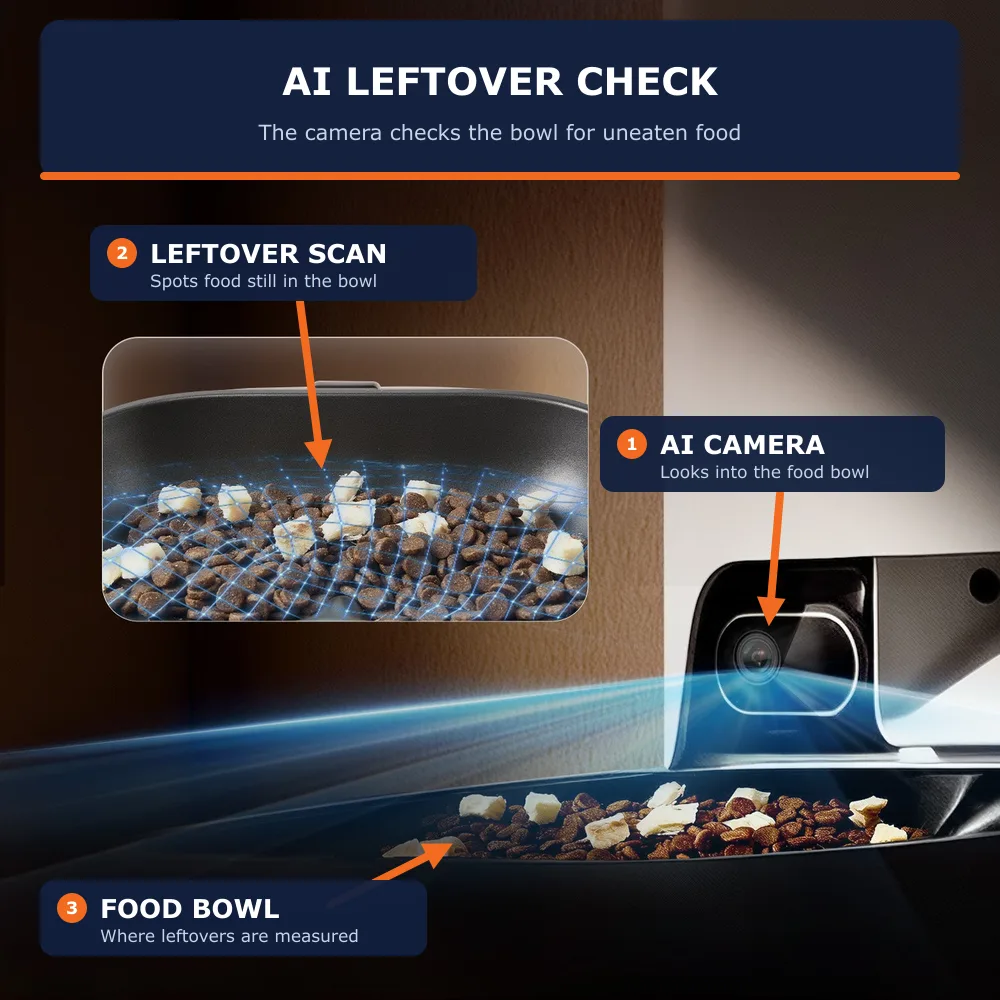
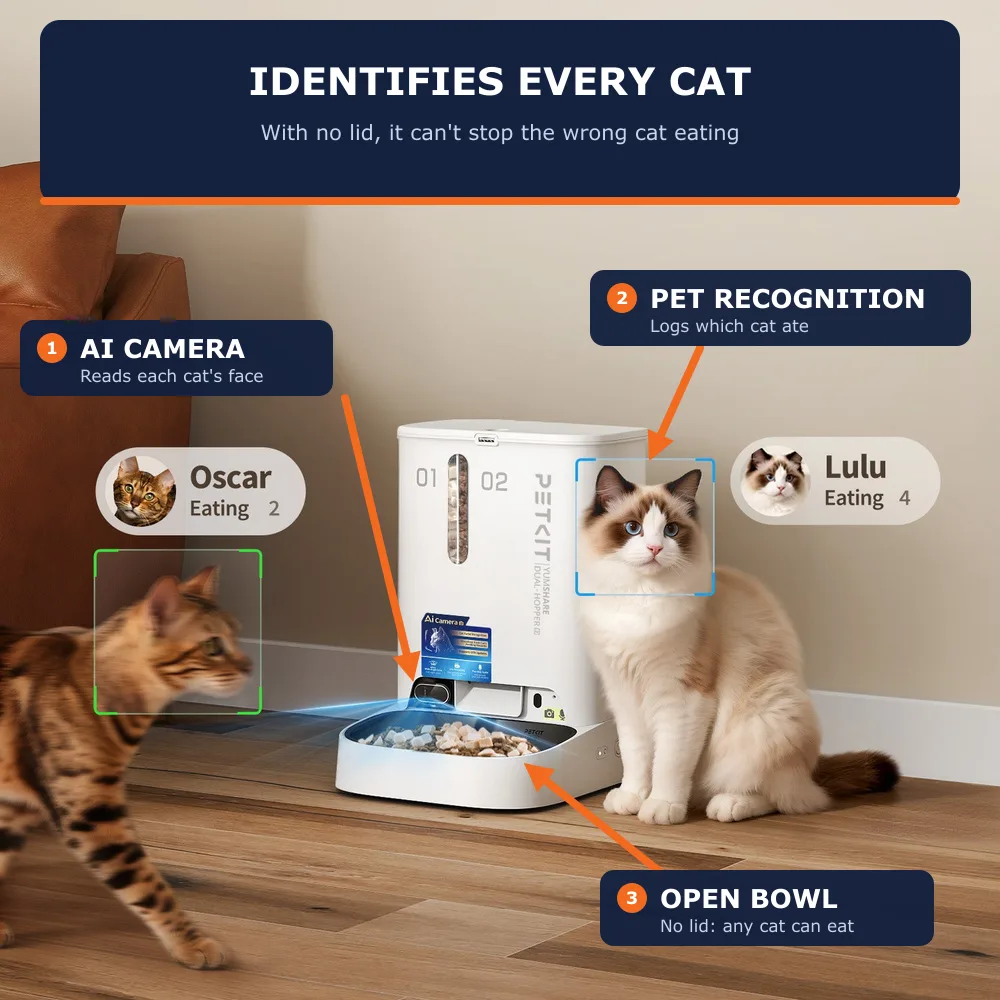
The Dual-hopper 2 uses an AI camera to recognise up to 15 pets without collars, logs every visit and takes before-and-after photos of the bowl. It has no lid, though, so it can't stop any cat eating, and it can't protect a prescription diet by itself.
Use it to identify the thief and confirm whether the diet cat is finishing its meals, alongside a selective feeder for the diet cat. Independent accuracy testing is still thin, and video replay needs a PETKIT Care+ subscription once the trial ends.
PETKIT YumShare Dual-hopper 2 key specs
Identifies
AI facial recognition, up to 15 pets (no access control)
Food
Dry kibble up to 12 mm; freeze-dried up to 9 mm
Hopper
5 L across two hoppers
WiFi
2.4 GHz and 5 GHz
Backup power
4 D batteries
Warranty
2 years (purchases from Jan 1, 2025)
Pros
Tracks each cat without collars
Two hoppers for two foods
Before-and-after bowl photos
Cons
Doesn't stop any cat eating
Video replay needs a subscription
Little independent accuracy testing
P
5. Best Budget — Petlibro Granary 2
$129.99 list
The Granary 2 is the cheapest feeder here, with a 5 L hopper and a scale that tracks intake to the gram. It measures how much food leaves the bowl, but it has no camera or lid, so it can't tell which cat ate or keep any cat out.
It makes sense when the diet cat is already fed separately, in another room or from a selective feeder, and the rest of the household shares one food. Appetite-change alerts need a paid Petlibro Care plan. If you want the Granary line to lock out other cats, the Granary 2 X ($279.99) adds a motorised lid that opens only for its assigned pet.
Petlibro Granary 2 key specs
Identifies
None (no camera or lid)
Food
Dry kibble only, 2 to 15 mm
Hopper
5 L
Intake tracking
Built-in scale
WiFi
2.4 GHz and 5 GHz
Warranty
24 months
Pros
Lowest price in this guide
Scale measures intake to the gram
Large 5 L hopper
Cons
Doesn't stop any cat eating
Can't tell which cat ate
Trend alerts need a subscription
Which One Should You Buy?
Match the feeder to your household:
If food-stealing between cats is the real problem rather than portion control, a feeder alone may not fully fix it — see our guide on stopping cats from stealing each other’s food.
Your household
Our pick
Why
One cat on a dry prescription diet
Petlibro One RFID
Locks the diet cat’s food and dispenses it on a schedule
One cat on a wet prescription diet
SureFeed Microchip Pet Feeder
Takes wet food in a sealed, microchip-locked bowl
Your vet wants intake records
SureFeed Microchip Pet Feeder Connect
Locks the bowl and logs how much each cat eats
Several cats on different diets
A SureFeed for each restricted cat
Reads existing microchips, so there are no tags to lose
Same diet, but you need to know who eats what
PETKIT YumShare Dual-hopper 2
Per-cat meal logs without collars
Tight budget, diet cat already fed separately
Petlibro Granary 2
Scheduled meals and intake measured to the gram for everyone else
If you’re unsure which cat is stealing, start by watching mealtimes for a week, or use a camera feeder, before you buy a selective one.
Source: PETKIT
The bottom line: for a multi-cat home with a prescription diet, buy a feeder that locks, not one that only watches. The SureFeed Microchip Pet Feeder Connect is our top pick because it locks, weighs and handles wet food; the Petlibro One RFID is the better value for dry food on a schedule. Petmonik will update these rankings as models and prices change; if one of these feeders has worked, or failed, in your home, tell us through our contact page.
What is the best smart feeder for a multi-cat home with a prescription diet?
Buy a feeder that locks, not one that only watches. Our top pick is the SureFeed Microchip Pet Feeder Connect because it locks the bowl, weighs and handles wet food. The Petlibro One RFID is the better value for dry food on a schedule.
Which smart feeder works for a wet prescription diet?
The SureFeed Microchip Pet Feeder. Most automatic feeders can’t handle wet food because their hoppers only take kibble, but this one is a sealed, microchip-locked 400 ml bowl that takes wet or dry food. It isn’t refrigerated, so don’t leave wet food out longer than you normally would.
Can a smart feeder read my cat’s microchip?
The SureFeed feeders can. They open only for pets you register, using the microchip your cat already has or a SureFlap RFID collar tag, and the standard SureFeed stores up to 32 pet identities. The Petlibro One RFID reads only its own collar tag, with one tag per feeder.
Does a camera feeder like the PETKIT YumShare protect a prescription diet?
Not on its own. The YumShare Dual-hopper 2 recognises up to 15 pets and logs every visit, but it has no lid, so it can’t stop any cat eating. Use it to identify the thief and confirm the diet cat finishes its meals, alongside a selective feeder for that cat.
What should I know before relying on a selective feeder for a prescription diet?
A selective feeder protects the diet cat’s bowl, but the diet cat can still eat from an open bowl, so feed the other cats at set times or in another room. Agree any feeding change with your vet. If you’re unsure which cat is stealing, watch mealtimes for a week or use a camera feeder before buying a selective one.
Sam Kerrow is the lead editor and smart pet technology researcher at Petmonik. Focusing on multi-pet households, RFID and AI selective feeders, smart hydration fountains, and pet telemetry data, Sam tests device reliability, firmware behavior, and practical troubleshooting for cat and dog owners.