Ecosystem & Troubleshooting

Ant Proof Automatic Cat Feeder: 5 Ways to Keep Ants Out of Your Smart Feeder

By Sam Kerrow Sam Kerrow Updated

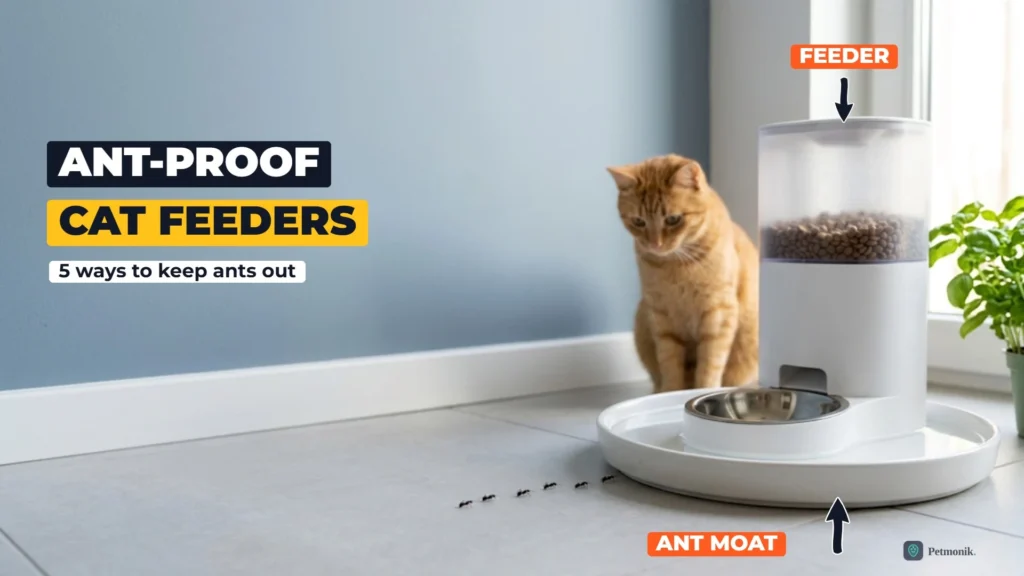
White automatic cat feeder standing in a wide water moat tray with a line of ants stopped at its edge and a ginger cat watching, on a tiled floor

A sealed hopper keeps food protected, but it won’t stop ants on its own — the bowl and the floor around it stay wide open, which is exactly where ants get in. You fill the hopper, set the schedule, and a week later there’s a neat black line of ants marching from the skirting board to your cat’s bowl. Below we break down where automatic feeders actually seal out pests, where they remain exposed, and five cat-safe barrier methods that keep ants away for good.

Quick Summary: Keeping Ants Out of an Automatic Feeder

  • The hopper is the easy part. A sealed lid and a desiccant pack protect stored food. Petlibro’s Granary page says it keeps pests out but does not mention ants specifically. For ant control in general, Oregon State Extension advises cleaning up food residue, including pet food, and storing food in sealed containers.
  • The bowl is where ants get in. Crumbs and scent trails around the dish are what attract them.
  • Best fixes: wash the bowl daily, add a water moat or a waterless barrier, and keep portions small so food is not left out.
  • Avoid: essential oils near the bowl. Catster warns they can cause serious and even fatal reactions in cats.

Why Ants Find Your Cat’s Automatic Feeder

Ants follow scent trails. Catster explains that crumbs and the pheromone trails ants leave behind are what bring them back, which is why wiping up food is not enough: the trail has to be cleaned too. An automatic feeder adds a few extra attractions:

  • Crumbs at the outlet and tray. Kibble dust collects where food drops into the bowl.
  • Meals that sit. A cat that grazes leaves food in the bowl between scheduled portions.
  • Gaps and cable routes. Ants can use the feeder’s base, the power cable and nearby walls as a path.
  • Warm, humid rooms. Moisture is the reason feeders ship with desiccant packs; Petlibro says its replaceable bags absorb moisture to prevent mold and clumping.

What “Ant-Proof” Really Means for a Smart Feeder

No mainstream smart feeder is certified as completely ant-proof. What leading models from Petlibro and PETKIT do offer is a sealed food hopper. Petlibro describes the Granary lid as quadruple sealed and lists replaceable desiccant bags, and PETKIT’s YumShare lid holds a desiccant compartment and a sealing ring. Those features protect the hopper. They do nothing for the bowl, which is open by design. The table below shows where each protection sits.

If ants have made their way into the dispensing mechanism itself, jams can follow — see our PETKIT feeder not dispensing fix.

Where ants get inWhat protects itBuilt in or manual?
Hopper (stored food)Sealed lid, sealing ring, desiccant bagBuilt in on many feeders. Replace desiccant on schedule (Petlibro says every two weeks).
Dispensing outlet and trayDaily washing, wiping crumbsManual. Clean the removable bowl and tray.
Bowl area on the floorWater moat or waterless barrierAdd-on. Not built into standard Petlibro or PETKIT feeders.
SurroundingsCleaning scent trails, sealed bag storageManual. Vinegar, lemon or an enzymatic spray can break up the scent marker (Catster).

Summary of smart feeder pest-barrier points. Always verify water clearance in your model’s manual before using a moat.
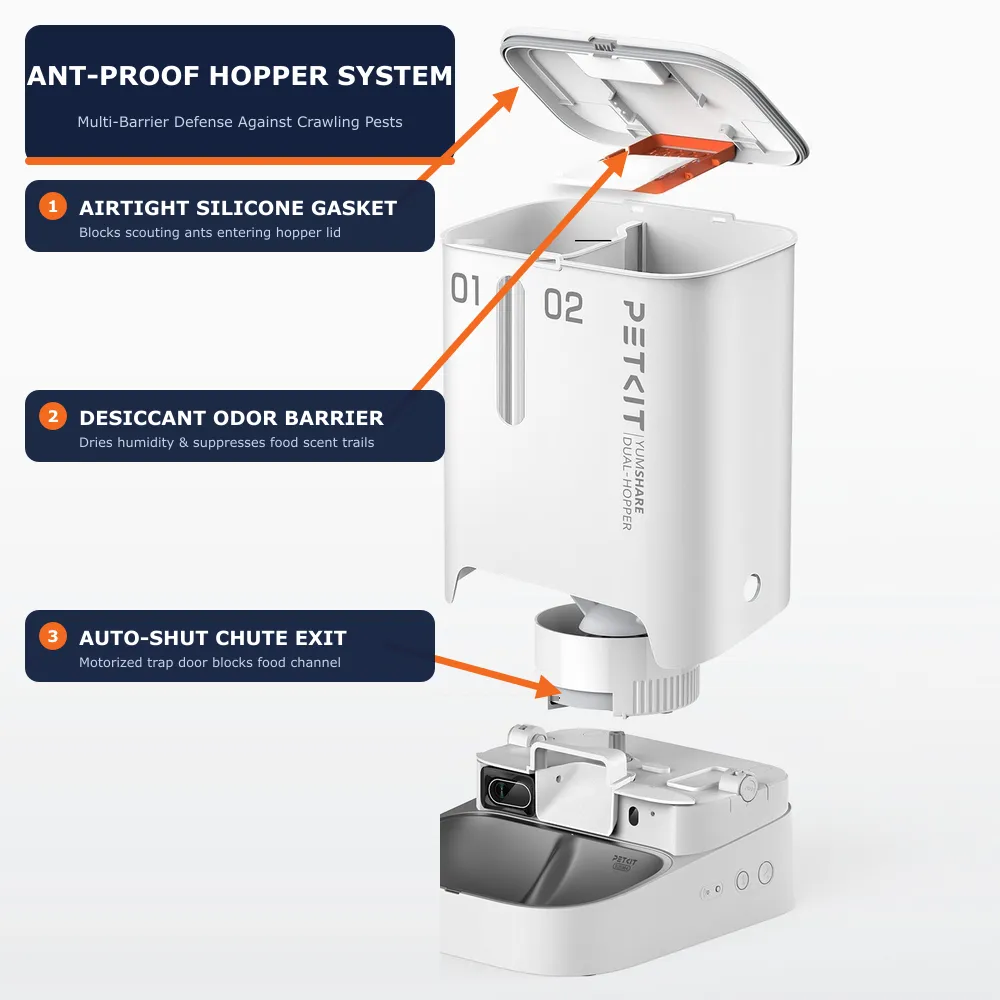
PETKIT smart feeder exploded diagram showing airtight silicone gasket, desiccant odor barrier, and motorized auto-shut chute exit protecting stored kibble against ants
Source: PETKIT

What to Look for in an Ant-Proof Feeder

Since no model is certified ant proof, choose a feeder that makes the five steps below easy:

  • A sealed hopper lid with a gasket or sealing ring.
  • A desiccant compartment so stored food stays dry.
  • A removable bowl and tray that you can wash daily without tools.
  • Small, frequent portions. Look for multiple scheduled meals per day. Petlibro’s Granary WiFi, for example, lists up to 10 meals a day.
  • A flat base that can sit in a shallow tray or on a barrier, if the manual allows it.

For a wider look at what is worth paying for, see our guide to which AI pet feeder features are worth it and which are gimmicks.
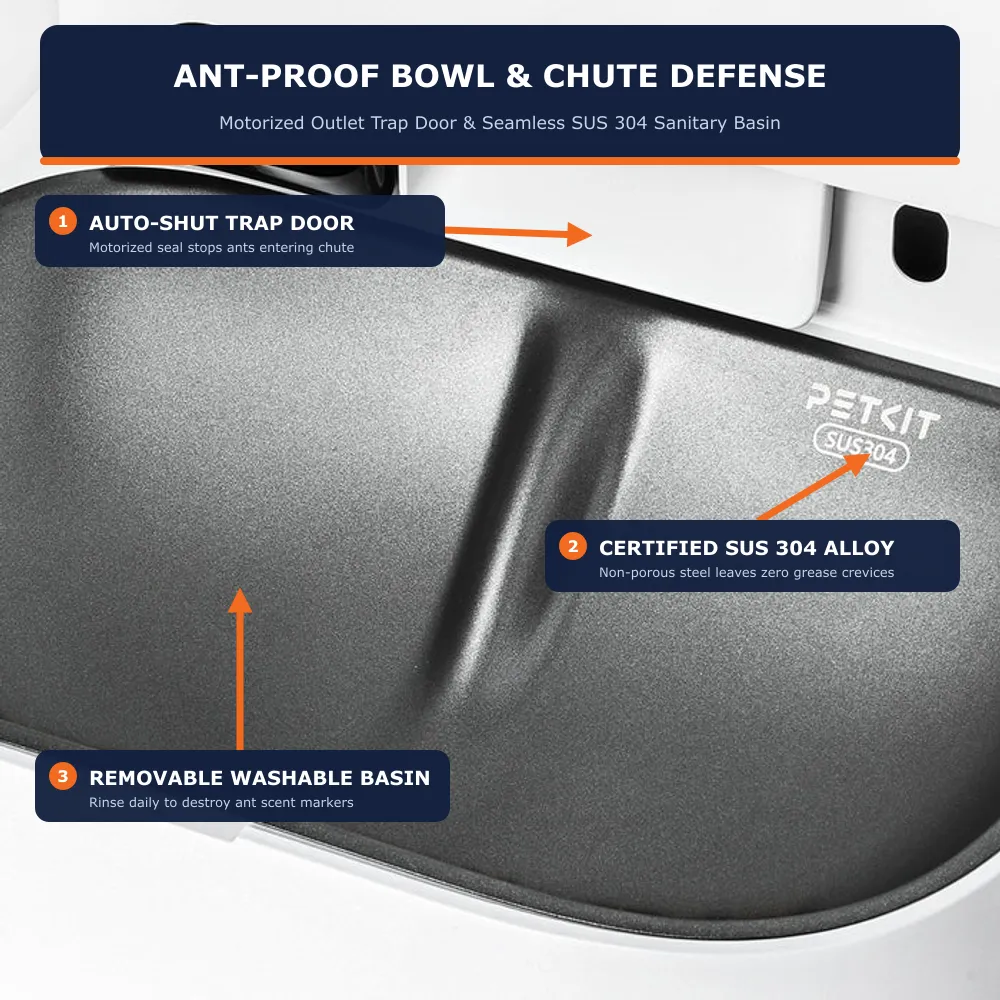
PETKIT automatic feeder top-down view showing motorized auto-shut trap door closed against pests, certified SUS 304 food-grade alloy basin, and removable washable dish
Source: PETKIT

5 Ways to Keep Ants Out of Your Automatic Cat Feeder

Start with Step 1, which solves most cases, and add the others as needed. Never use essential oils, cayenne or cinnamon around the bowl: Catster warns essential oils can be fatal to cats, and spices repel cats as well as ants.

  1. Step 1 — Clean the Scent Trail First

    Ants return along the pheromone trail, so remove it before you add any barrier.

    1. Wash the removable bowl and tray with detergent every day.
    2. Wipe the floor and base where the trail runs with vinegar, lemon or an enzymatic spray to disrupt the scent marker.
    3. Avoid essential oils entirely near the bowl.
  2. Step 2 — Set the Bowl in a Water Moat

    A shallow moat is the cheapest barrier, because ants cannot cross the water.

    1. Use a shallow container such as a cake pan, with at least one inch of space between the bowl and the edge.
    2. Add water, and a little soap if you like, as Alley Cat Allies describes for its soap-and-water moats.
    3. Refresh the water regularly and remove any dead insects.
    4. Keep the adapter, cable and feeder electronics out of the water, and check your manual before placing the feeder body in a tray. If it cannot sit in one, moat only the bowl or the feeder’s feet.
  3. Step 3 — Try a Waterless Barrier

    If you do not want to refill a moat, a barrier built with a lip stops ants climbing.

    1. Alley Cat Allies lists waterless options such as Fool-A-Bug and The Mote, built from UV-rated, non-toxic resin with edges that prevent ants climbing onto the dish.
    2. Check the barrier fits the bowl or base you use.
    3. Clean it with the bowl so it does not collect crumbs.
  1. Step 4 — Seal the Hopper and Stored Food

    Protect what is stored inside the feeder and in the bag.

    1. Make sure the hopper lid and sealing ring are seated correctly after every refill.
    2. Replace the desiccant on the maker’s schedule; Petlibro says every two weeks.
    3. Keep opened bags of food in sealed containers, as Catster advises.
  2. Step 5 — Keep Portions Small and Do Not Leave Food Out

    Food that sits is food that ants find.

    1. Split the daily amount into several small scheduled meals.
    2. Alley Cat Allies recommends feeding only what a cat can eat in about 30 minutes, which suits manual feeding best.
    3. Check the bowl a short while after each meal. If food is regularly left over, reduce the portion and confirm the amount with your vet.

How to Stop Ants Coming Back

  • Wash the bowl and tray every day with detergent, as Catster advises, so no crumbs or scent trail remain.
  • Refresh moat water regularly. Catster says to remove dead insects, and Alley Cat Allies says soap-and-water moats need refreshing monthly.
  • Store opened bags in sealed containers rather than leaving a bag open beside the feeder.
  • Check the hopper desiccant and replace it on the maker’s schedule.
  • Watch where the trail starts. If ants keep appearing despite a clean, barrier-protected feeder, the nest may be close by and a pest-control professional can help.

If your feeder also gets a jammed impeller from damp or sticky food, our PETKIT feeder not dispensing fix covers cleaning the dispensing parts.

Ants are one of several food-storage problems. For others, see our guides on wet food in automatic feeders and keeping the hopper dry with desiccant bags.

The bottom line: a sealed hopper protects the food inside, but ants reach the bowl. Daily washing plus a moat or barrier handles almost every case, and smaller portions mean less food sitting out. Petmonik will update this guide as brands add pest-proof features; if a method worked for you, tell us through our contact page.

Frequently Asked Questions

Is there such a thing as an ant proof automatic cat feeder?

No mainstream smart feeder is sold as completely ant-proof. Feeders such as the Petlibro Granary advertise sealed lids and desiccant to keep food fresh and pests out, but the bowl stays open, so add a moat or barrier.

How do I keep ants out of my cat’s automatic feeder bowl?

Wash the bowl and tray daily, clean the area around the feeder to remove scent trails, and set the bowl in a water moat or on a waterless ant barrier. Keep portions small so food does not sit out.

Does a water moat work for a cat feeder?

Yes. Catster describes placing the bowl in a shallow water-filled container with an inch of space around it, because ants cannot cross the water. Keep electrical parts and cables out of the water and check your feeder manual first.

Is it safe to use essential oils to repel ants near cat food?

No. Catster strongly cautions against essential oils near cat bowls because cats can suffer serious and even fatal reactions from skin contact or ingestion.

How often should I change the desiccant in my automatic feeder?

Follow the maker’s schedule. Petlibro says its replaceable desiccant bags should be changed every two weeks, and the desiccant helps prevent mold and clumping in the hopper.

Sam Kerrow
Written by

Sam Kerrow

Lead Hardware & Pet Tech Editor

Sam Kerrow is the lead editor and smart pet technology researcher at Petmonik. Focusing on multi-pet households, RFID and AI selective feeders, smart hydration fountains, and pet telemetry data, Sam tests device reliability, firmware behavior, and practical troubleshooting for cat and dog owners.

Leave a Reply

Your email address will not be published. Required fields are marked *