

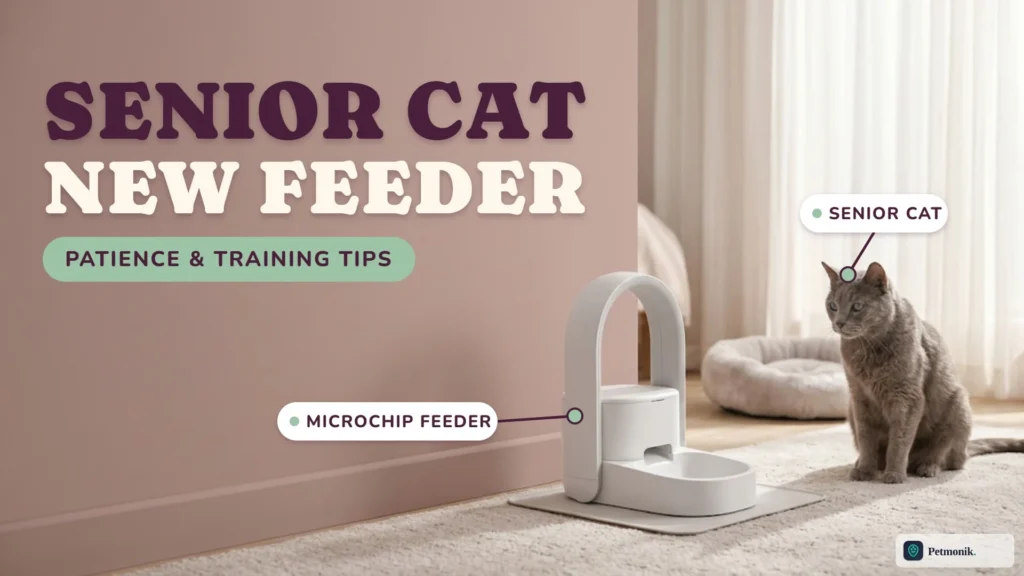
Your 14-year-old cat has eaten from the same bowl in the same corner for a decade. Now you need a microchip feeder, maybe because a younger cat keeps stealing her prescription food, and she stares at the new machine like it is an intruder. Training a young cat is mostly about patience. When you train a senior cat to use a microchip feeder, you also have to watch for something else: a senior cat who eats less is not always being stubborn, and sometimes the feeder is not the problem. This guide covers a slow, low-pressure introduction and the health signs that should send you to the vet. Below we map out a multi-stage habituation plan tailored to older joints, teeth, and routines, along with the warning signs that mean a vet visit comes first. This is a gentle plan to train senior cat microchip feeder habits without stress.
Quick Summary: Training a Senior Cat for a Microchip Feeder
- Go slower than you think you need to. Sure Petcare says some pets adapt in hours or days while others take much longer.
- Use training mode. The SureFeed has four training stages that close the lid by different amounts.
- Never use hunger as a tool. Keep the old bowl available until the new one is accepted.
- Treat appetite changes as a health signal. VCA advises calling your vet about decreased appetite or weight loss in a senior cat.
Why a Microchip Feeder Is a Bigger Change for an Older Cat
A microchip or RFID feeder opens only for the pet whose chip or tag it recognizes. It is useful when cats need different diets, are on a weight plan or take medication with food. For a senior cat, three things make the switch harder:
- Routine matters more. Older cats usually cope worse with changes to where and how they eat.
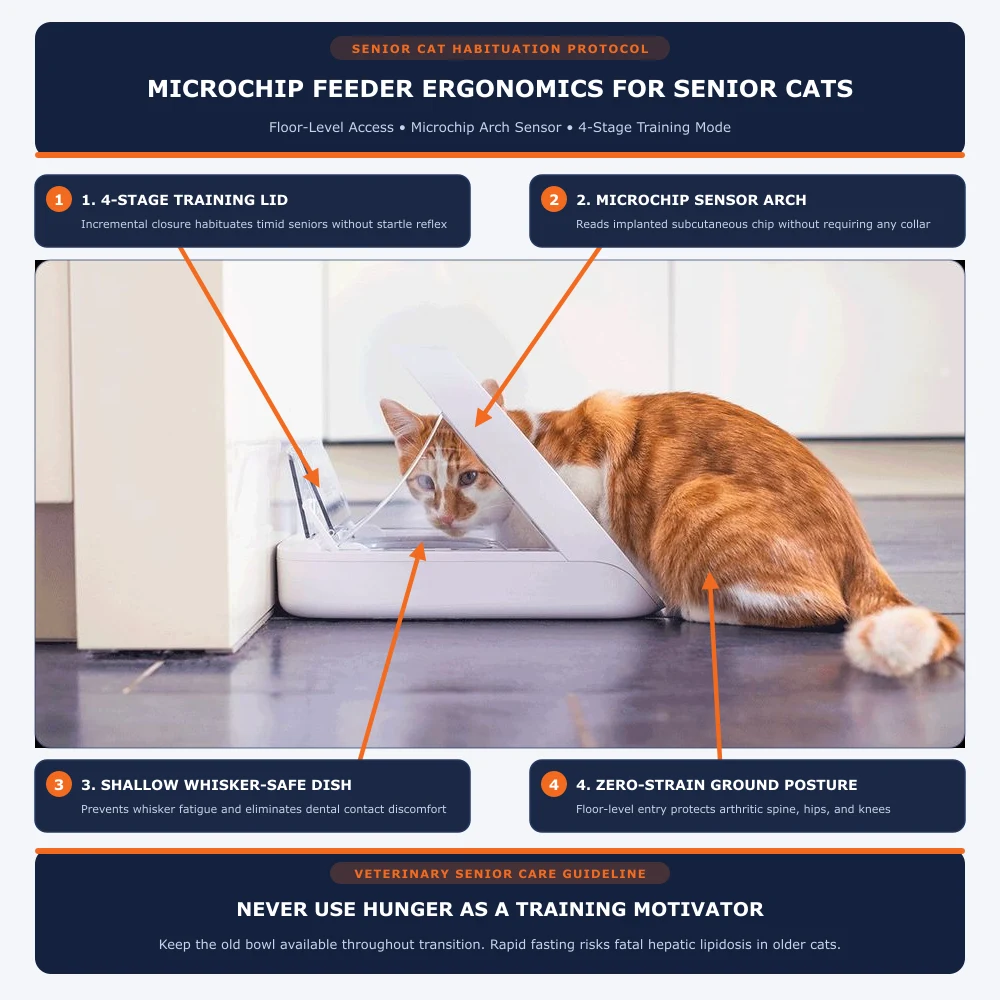
- Physical comfort. Arthritis and joint problems make stiffness and jumping difficult, according to Royal Canin’s guide on older cats, and a feeder that is hard to reach can put her off.
- Mouth pain. VCA notes that older cats may have more sensitive teeth and gums, so eating can hurt.
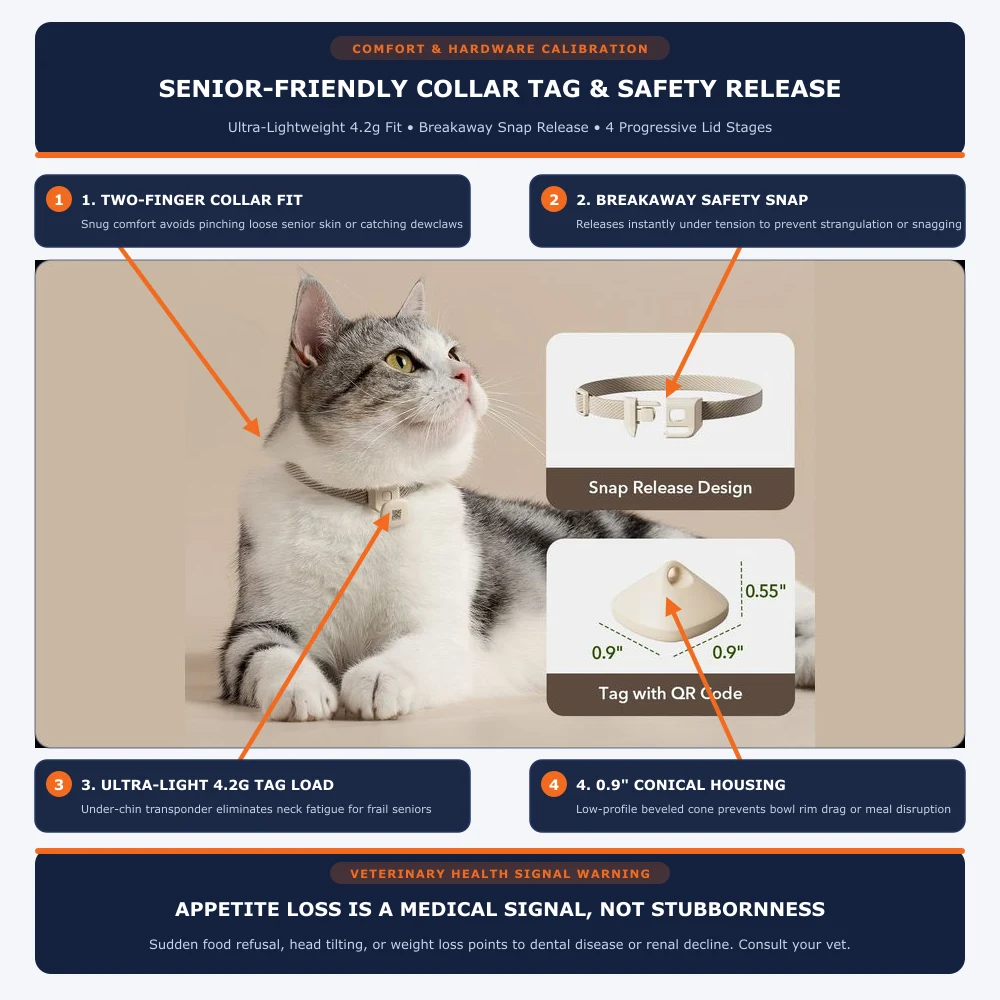
If your cat already ignores her food, start with the vet. Weight loss in an older cat is a non-specific sign that can point to kidney disease, hyperthyroidism or dental problems, per Royal Canin, and it deserves a diagnosis before you blame the new feeder. For the general method of moving any cat to a machine, our guide to transitioning a cat to an automatic feeder covers the basics. This post focuses on what changes for older cats.
Before You Start: A Senior Cat Checklist
- Get a recent vet check. Ask about teeth, weight and appetite before changing how she eats.
- Note her current routine. Where she eats, how often and what time.
- Choose the spot carefully. A quiet place she already likes, with easy access and no jumping.
- Check the height and step. The feeder should be easy to reach without stretching.
- Keep her normal food. Do not change the diet and the feeder at the same time.
- Plan for weeks, not days. Treat any faster progress as a bonus.
Step-by-Step: Training a Senior Cat to Use a Microchip Feeder
The sequence below uses the four-stage training mode found on the SureFeed Microchip Pet Feeder; collar-tag RFID feeders like the Petlibro ONE RFID follow the same gradual habituation logic.
Step 1: Let the Feeder Become Part of the Furniture
Put the feeder near her usual bowl with the lid open and no chip required. Leave it there for several days. The goal is that she sniffs, ignores or explores it on her own terms.
Step 2: Move the Bowl Closer, Then Onto the Feeder
For cautious senior cats, keep serving meals in the familiar spot and inch the bowl closer to the feeder over several days: beside the base first, onto the front mat next, and only then into the cradle before any lid motion begins.
Step 3: Swap in the Feeder Bowl
With the lid open, replace her normal bowl with the feeder’s own bowl, then work toward placing it inside the feeder. Add a favorite treat for the first few meals so the feeder predicts something good.
Step 4: Introduce the Lid Gradually
Use training mode. Sure Petcare says it partially closes the lid by different amounts across four stages. Move to the next stage only when she looks comfortable. Rushing a startled senior cat to full lid motion too early can set progress back by weeks.
Step 5: Add the Chip or Tag
Once she is happy with the lid, switch to normal operation so the feeder opens for her chip. Watch the first few meals. If she hesitates, step back one stage.
Training Timeline: What to Expect
| Stage | What you do | Move on when |
|---|---|---|
| Introduction | Feeder nearby, lid open, old bowl in use | She approaches without fear |
| Bowl swap | Feeder bowl in the usual spot | She eats normally from it |
| Training mode 1 to 4 | Lid closes by increasing amounts | She eats calmly at each stage |
| Full operation | Chip-activated lid | She eats normal portions for several meals |
Sure Petcare does not give a fixed number of days. Some cats adapt within hours or days, and others take much longer, so follow your cat, not the calendar.
Make the Feeder Senior-Friendly
- Soft food access. Wet or canned food is softer and often more appealing for cats with dental problems, per VCA, but check that your feeder is designed for wet food. See our wet food feeder safety guide.
- Water nearby. VCA notes senior cats have a decreased sense of thirst, so place several bowls around the home.
- Low-effort access. Keep the feeder at ground level with no steps, and use ramps and low-sided litter boxes for mobility as Royal Canin suggests.
- Warm the food. Royal Canin notes that warming meals can enhance aroma and appetite in cats that have lost weight.
- Quiet placement. Away from loud appliances and busy doorways.
Warning Signs: When It Is Not About the Feeder
Stop the training and call your vet if you see any of these:
- Eating noticeably less, or not at all, for more than a short time.
- Weight loss.
- Drinking and urinating much more than usual, which Royal Canin links with diabetes in older cats.
- Dropping food, chewing on one side or pawing at the mouth.
- Hiding, vomiting or sudden behavior changes.
Cats that stop eating can develop serious liver problems, so do not wait it out. Keep the old bowl available throughout the transition so her meals never depend on a machine she has not accepted.
If the Feeder Still Does Not Work for Her
- Go back one stage and stay there for longer.
- Try a different spot, or put the feeder in a separate room from the other cat.
- Check whether the chip is being read; position and tag type matter on some models. See our Petlibro RFID feeder setup guide for an example of a tag-based setup.
- Consider whether a different design suits her better. Our multi-cat prescription diet feeder guide and our PETKIT and Petlibro RFID comparison cover alternatives.
- Ask your vet whether separate rooms or timed meals would work better for her.
The bottom line: a senior cat can learn to use a microchip feeder, but she needs a slower pace, a comfortable setup and a vet who knows her health. Use training mode, keep the old bowl until she is ready, and treat a drop in appetite as a medical question first. Petmonik will update this guide as brands change their training features.
Frequently Asked Questions
How do I train a senior cat to use a microchip feeder?
Introduce the feeder with the lid open, move the bowl closer, swap in the feeder bowl and use training mode to close the lid gradually. Move on only when your cat looks comfortable.
How long does it take an older cat to accept a microchip feeder?
Sure Petcare says some pets adapt within hours or days while others take much longer. Follow your cat’s pace rather than a fixed schedule.
Is a microchip feeder suitable for a senior cat?
It can be, especially in a multi-cat home where she needs her own diet. Check that she can reach it easily and that she has no dental or mobility problems that make eating hard.
What should I do if my senior cat refuses to eat from the new feeder?
Go back to her old bowl so she keeps eating, then restart training more slowly. If she eats less overall or loses weight, call your vet, since VCA advises checking appetite changes in senior cats.
Can I use wet food in a microchip feeder?
Only if the feeder is designed for it. Wet food can suit older cats with dental problems, but many feeders are made for dry food, so check the manual.
Should I remove my cat’s old bowl right away?
No. Keep it available until the feeder is accepted, and never use hunger to force the change.