

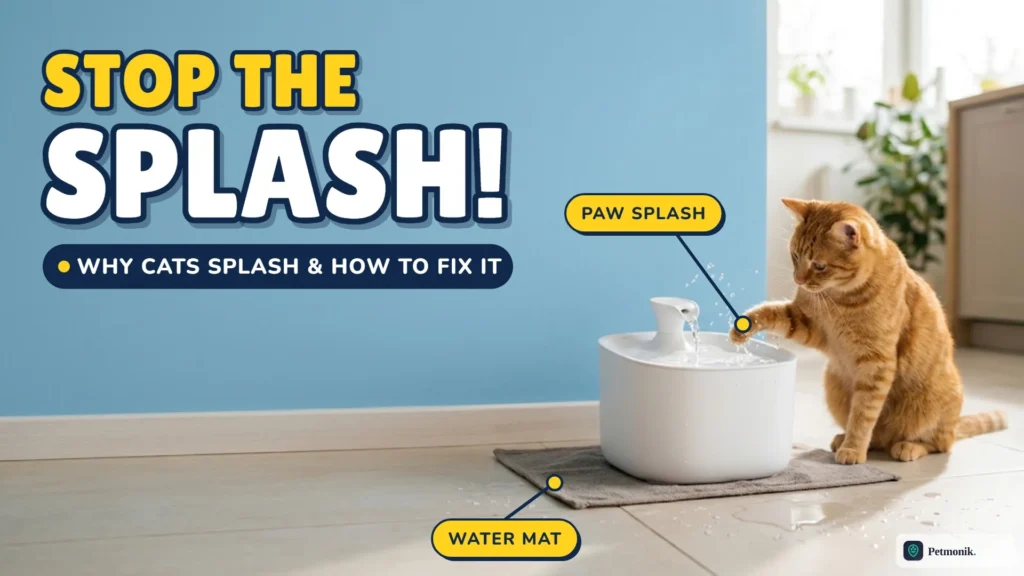
You bought a smart fountain to keep your cat hydrated, and now there is a puddle on the floor every morning. She bats the stream, dunks a paw, flicks water across the tile and walks away with wet feet. Before you assume she is just being naughty, know that cat splashing water out of smart fountain problems usually have a reason, and most of the reasons are fixable. This guide goes through the causes that vets and behaviour sources describe, the settings and setup changes that help, and the one situation where pawing at water is a health signal, not a habit. Below we break down feline depth perception, basin ergonomics, and pump flow adjustments to help eliminate the mess while keeping fresh water flowing.
Quick Summary: Why Cats Splash and What Helps
- Common reasons: a deep or narrow basin, a love of moving water, checking the water depth, stress, play and territory marking, according to a vet-reviewed list of seven causes.
- Try these first: a wider, shallower drinking area, a calmer spot away from food and litter, steady water level and, where your model allows it, gentler flow.
- Protect the floor: placing a raised-edge silicone waterproof mat beneath the base catches stray splashes and prevents floor damage while you adjust the settings.
- See a vet if it is new and sudden, or if drinking, appetite or energy changes. Vision problems and conditions that raise thirst can play a part.
Why Do Cats Paw at Water and Splash It?
Feline behaviorists typically group water-pawing into three main categories:
Comfort and Design
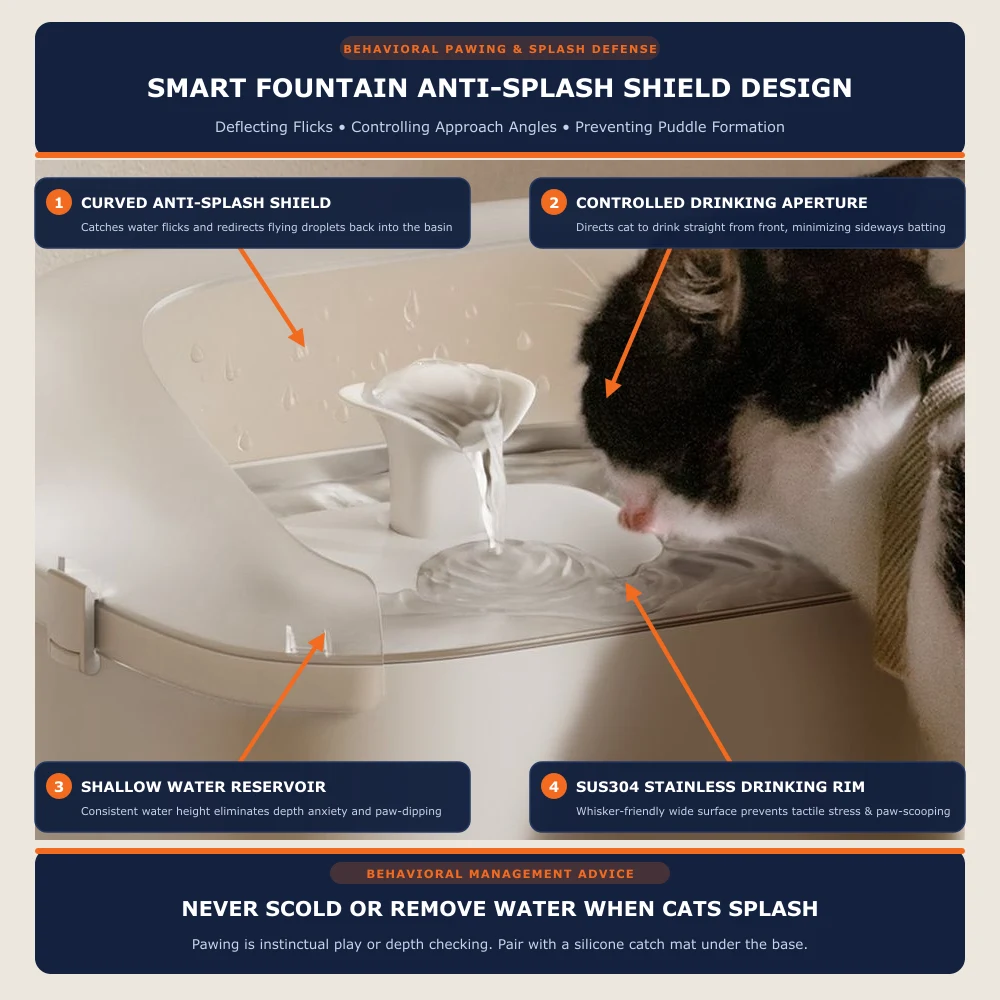
- Deep or narrow basin. The article says cats’ whiskers are very sensitive, so narrow containers may make a cat scoop with a paw rather than dip her head. This is the popular “whisker fatigue” idea, which is a theory, not an established diagnosis. Our whisker fatigue fountain guide looks at the evidence.
- Trouble judging depth. Cats may struggle to see the water level and test it with a paw, especially in dim light. Cats have difficulty focusing on still, clear water within a few inches of their nose, often leading them to tap the surface to detect the water line before putting their face down.
Instinct and Interest
- Preference for moving water. Pawing creates movement, which may mimic running water. International Cat Care also notes some cats like moving water, which we cover in our guide on whether cats drink more from flowing water.
- Play and curiosity. A moving stream is a toy. Boredom can make it more tempting.
- Territory marking. Cats possess scent glands in their paw pads, and some individuals instinctively paw near water or food stations to deposit their scent and establish security.
Stress and Health
- Stress. Anxious cats may paw at water alongside reduced appetite, hiding or excessive grooming, often after a household change.
- Underlying health issues. Conditions such as kidney disease or diabetes increase drinking. Any sudden escalation in water-pawing accompanied by changes in appetite, energy, or litter box output warrants a veterinary evaluation to rule out metabolic conditions like diabetes or kidney disease.
Is Splashing Normal, or a Sign of a Problem?
| What you see | Likely cause | What to do |
|---|---|---|
| Cat bats the stream, then drinks normally | Curiosity or play | Offer play elsewhere; adjust the setup if it makes a mess |
| Paws the surface before every sip | Depth checking or comfort | Try a wider, shallower basin and a steady water level |
| Splashing started suddenly in a senior cat | Possible vision or health change | See your vet |
| Pawing plus more drinking, less appetite, or hiding | Possible medical issue or stress | See your vet promptly |
| Splashing started after a new pet or a move | Stress or marking | Add water stations and reduce stress |
The Vet Desk guidance notes that if the behavior changes suddenly, vision problems or other health issues may be involved. That is the main time not to treat splashing as a purely behavioural quirk.
How to Stop a Cat Splashing Water Out of a Smart Fountain
1. Choose or Adjust a Wider, Shallower Drinking Area
The Vet Desk advises a wider, shallower bowl in glass, stainless steel or ceramic rather than plastic, and says a fountain’s shallow tray and consistent water level can discourage paw-dipping. If your fountain has a narrow slot, see whether a wider model suits your cat better. Our stainless steel vs plastic fountain comparison explains what each material means for hygiene.
2. Keep the Water Level Steady
A fluctuating level makes depth harder to read. Petlibro says the Dockstream stops the water flow when the level drops below the low-water line and sends a refill alert in the app, so refill when notified. Top up before the level drops, and keep it where the brand says is full.
3. Turn the Flow Down, or Use Intermittent Mode
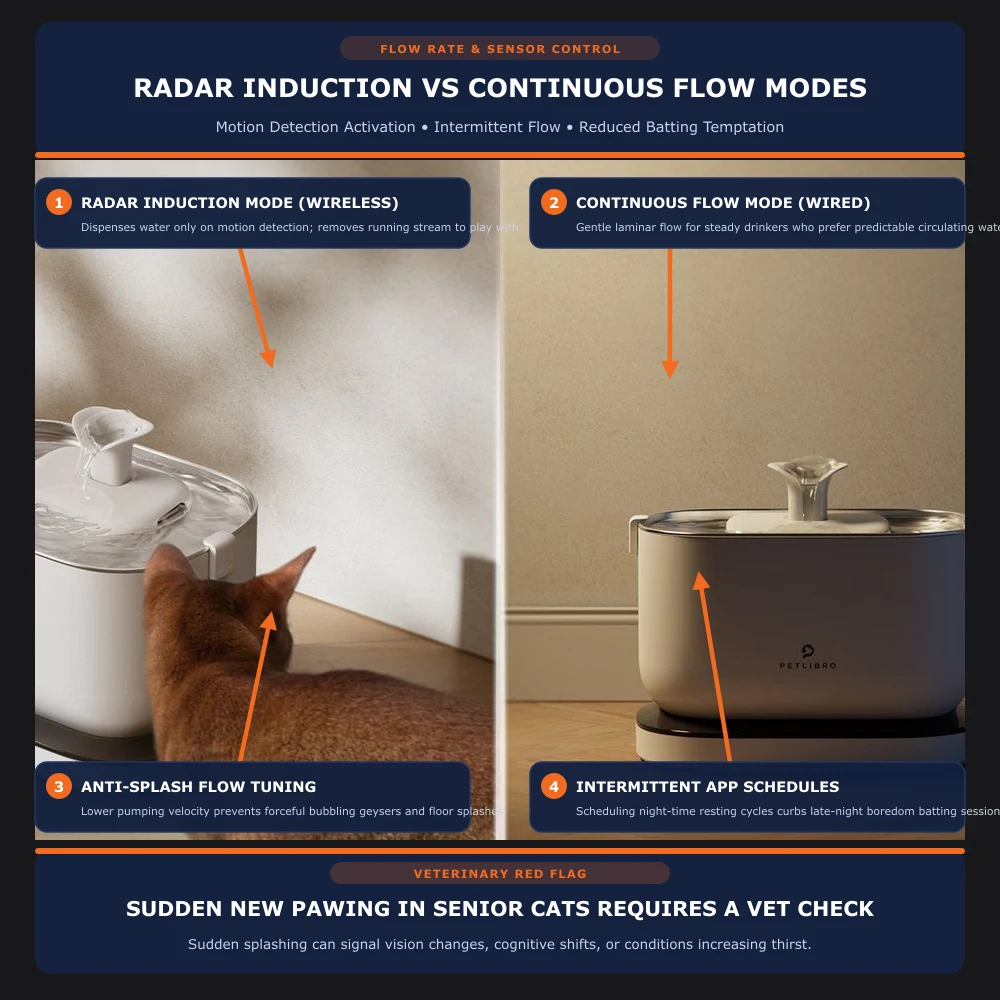
A strong jet splashes more. Petlibro says the Dockstream lets you choose continuous or intermittent flow, on a schedule you set. Some other brands sell separate flow adjustment kits; PetSafe lists one for its Drinkwell 360 fountain. Check whether your model offers a flow control before buying accessories. A lower flow setting reduces surface agitation and splashing force, encouraging calmer drinking.
4. Move the Fountain to a Calm Spot
Place the water away from food and the litter box, in a quiet spot where your cat can see her surroundings while drinking, as the Vet Desk suggests. A cat that feels exposed may paw rather than put her head down.
5. Add a Mat to Protect the Floor
A silicone mat with a raised lip catches rogue water droplets and prevents floor damage while you address the root behavioral trigger.
6. Offer More Than One Water Station
In a multi-pet home, the Vet Desk recommends one bowl per cat plus one extra, to reduce competition and stress. If splashing is territorial, separate stations may help.
7. Keep the Water Clean
Cats may paw at floating debris, according to the Vet Desk. Clean the tray and pump on schedule. See our guide to cleaning a smart pet fountain pump.
Fountain Settings and Features That Help, by What Brands Publish
| Feature | Hardware / feature detail | Why it may help |
|---|---|---|
| Flow mode | Petlibro Dockstream: continuous or intermittent, schedulable | Less constant stream to bat at |
| Low-water stop | Petlibro Dockstream stops flow below the low-water line | Prevents dry running and nudges you to refill |
| Noise level | Petlibro lists 23 dB for the Dockstream | Quiet pumps may be less startling |
| Flow adjustment kit | PetSafe sells one for the Drinkwell 360 | Lets you reduce the stream on that model |
| Splash or spout design | Petlibro’s Dockstream page makes no splash claims | Check owner reviews for your model |
Because splash prevention depends heavily on your cat’s approach angle and paw size, pairing intermittent flow with a wide stainless basin offers the highest success rate.
What Not to Do
- Do not scold your cat. Pawing at water is normal behavior for many cats.
- Do not remove the water to stop the mess. Hydration matters more.
- Do not ignore sudden change. New pawing in an older cat deserves a vet check.
- Do not move everything at once. Change one thing and watch for a few days.
If you want to know whether your cat is actually drinking enough while you tweak the setup, our smart fountain hydration tracking guide explains how to use the data.
For a fountain that fits a wider setup, see our feeder, camera and fountain bundle guide.
The bottom line: cat splashing water out of smart fountain problems are common, and the likeliest fixes are a wider, shallower and calmer drinking setup with a steady water level and gentler flow. A mat protects the floor while you experiment. If the pawing is new, sudden or comes with changes in drinking, appetite or energy, call your vet. Adjust basin width and flow rate first, and let your cat’s drinking confidence guide the setup.
Frequently Asked Questions
Why does my cat splash water out of the fountain?
Common reasons include a deep or narrow basin, checking the water depth, a liking for moving water, play, stress and territory marking. Sudden new pawing can also point to a health issue.
Is it normal for cats to paw at water?
Yes, it is common. Vet-reviewed guidance lists curiosity and instinct among the causes. See a vet if it begins suddenly or comes with changes in drinking, appetite or energy.
How do I stop my cat splashing water out of a smart fountain?
Offer a wider, shallower drinking area, keep the water level steady, lower the flow if your model allows it, place the fountain in a quiet spot and use a mat to protect the floor.
Does whisker fatigue make cats splash water?
It is a popular explanation, but it is not an established diagnosis. A wider, shallower basin may help, and it is low risk to try.
Can I reduce the flow on my pet fountain?
Some models can. Petlibro says the Dockstream offers continuous or intermittent modes, and PetSafe sells a flow adjustment kit for its Drinkwell 360. Check your own model.
When should I see a vet about my cat pawing at water?
If the behavior is sudden, if your cat drinks more or less than usual, or if you see lethargy, hiding or appetite changes. Vision problems and conditions such as kidney disease or diabetes can be involved.